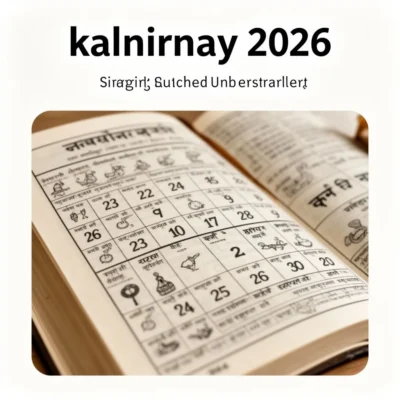
The Kalnirnay 2026 calendar is already generating serious interest among Marathi households worldwide, and for good reason. This isn’t just another almanac. It’s the trusted daily companion that millions of families rely on for muhurtas, festival dates, and the kind of practical astrological guidance that shapes everything from wedding dates to housewarming ceremonies. In this guide, I’ll walk you through everything you need to know about the new edition, from how to get your copy to the key dates you should circle right now.
Quick Answer: Kalnirnay 2026 is the latest edition of India’s most popular Marathi almanac, published by Sumangal Press. You can pre-order the physical copy, download the official app, or access the digital panchang starting from late 2025. The calendar covers all Hindu festivals, muhurtas, and daily panchang details for the year 2026.
What Makes Kalnirnay 2026 Different From Previous Editions
Kalnirnay has been the gold standard for Marathi panchang since 1973. The 2026 edition continues that legacy but with some notable refinements that regular users will appreciate. The publishers at Sumangal Press have maintained the core structure that loyal readers expect while improving readability and adding more detailed tithi information for key festivals.
The 2026 edition includes:
- Daily panchang with tithi, nakshatra, yoga, and karana details
- Monthly overview pages with festival highlights
- Muhurta tables for weddings, griha pravesh, and other ceremonies
- Detailed festival descriptions with historical and mythological context
- Sankashti Chaturthi and Ekadashi fasting calendars
- Government holiday listings for Maharashtra
The print quality has also seen a bump in recent years. The paper stock is slightly thicker than older editions, which matters when you’re flipping through it daily for an entire year. The binding holds up better too, something anyone who’s had a calendar fall apart by August will appreciate.
Pro Tip: If you’re buying the physical copy, look for the “Deluxe Edition” which includes a separate wall calendar with large-print dates. It’s worth the small premium if you have elderly family members who struggle with the standard font size.
How to Download Kalnirnay 2026: Official App and Digital Options
The Kalnirnay app has become the go-to option for younger users and families living outside India. The digital version syncs with your phone’s calendar and sends daily notifications about tithi changes and upcoming festivals. Here’s how to get it set up.
Step-by-step download process:
- Open the Google Play Store or Apple App Store on your device
- Search for “Kalnirnay” (the official app is published by Sumangal Press)
- Verify the publisher name before downloading to avoid third-party copies
- Install the app and select your preferred language (Marathi, Hindi, English, or Gujarati)
- Choose 2026 from the year selector once the new edition goes live
- Enable notifications to receive daily panchang alerts
The digital version offers several advantages over print. You get automatic location-based sunrise and sunset times, which matter for calculating daily muhurtas accurately. The app also includes a searchable festival database that makes it easy to check dates months in advance.
The one drawback: The app requires an internet connection for some features, which can be frustrating if you’re in a rural area or traveling. The physical calendar never needs a signal.
Pro Tip: Download the app before January 1, 2026. Many users report server slowdowns during the first week of the new year when everyone tries to access the new panchang simultaneously.
Kalnirnay 2026 Panchang: Understanding the Daily Details
The daily panchang is the heart of Kalnirnay, and if you’ve ever stared at those columns of Sanskrit terms without fully understanding them, you’re not alone. Let me break down what each element actually means for your daily decisions.
The five core elements (Panchang):
| Element | What It Shows | Practical Use |
|---|---|---|
| Tithi | Lunar day (1 to 30) | Determines fasting days and festival dates |
| Vara | Day of the week | Basic auspiciousness for activities |
| Nakshatra | Lunar mansion (27 total) | Used for naming ceremonies and muhurtas |
| Yoga | Combined sun-moon position | Influences overall day quality |
| Karana | Half of a tithi | Fine-tunes muhurta calculations |
The 2026 edition maintains the traditional format with these five elements displayed prominently on each page. The tithi timings are calculated for Indian Standard Time (IST) by default, with a note explaining how to adjust for international time zones. That adjustment matters more than most people realize. A tithi that ends at 6:47 PM IST might still be active in the morning for someone in New Jersey, but you need to do the math yourself.
The panchang also includes Rahu Kalam and Gulika Kalam timings, which many families consult before starting new ventures or leaving for important journeys. These are listed daily and updated for your specific city in the app version.
Key Dates and Festivals in Kalnirnay 2026
Here’s where the calendar earns its keep. The 2026 festival schedule includes all the major Marathi and Hindu observances, with a few dates that fall on particularly auspicious combinations this year.
Major festivals in Kalnirnay 2026:
- Gudi Padwa (Marathi New Year): March 19, 2026
- Ganesh Chaturthi: September 4, 2026
- Navratri begins: October 11, 2026
- Diwali (Laxmi Pujan): November 8, 2026
- Makar Sankranti: January 14, 2026
The 2026 Ganesh Chaturthi falls on a Friday, which is considered highly auspicious since Friday is associated with the goddess and general prosperity. Expect larger-than-usual celebrations in Mumbai and Pune.
Wedding season 2026: The most sought-after muhurtas cluster in late April through June and again in November and December. If you’re planning a wedding, book venues early. The best dates according to the panchang calculations are typically announced in the November 2025 edition, so keep an eye out.
The calendar also marks Adhik Maas (the extra lunar month) which occurs in 2026. This is significant because certain ceremonies like weddings and griha pravesh are traditionally avoided during this period. The exact dates will be confirmed in the final printed edition, but preliminary calculations point to a mid-year placement.
Pro Tip: Mark the Adhik Maas dates as soon as you get your calendar. If you’re planning any major life event in 2026, avoiding this period will save you from having to reschedule later.
Kalnirnay 2026 vs Digital Alternatives: Which Should You Choose?
The rise of digital panchang apps has created a real debate in many households. Should you stick with the physical Kalnirnay that your grandparents used, or switch to a digital alternative? Here’s an honest comparison based on how most families actually use these calendars.
| Feature | Physical Kalnirnay 2026 | Kalnirnay App | Other Digital Apps |
|---|---|---|---|
| Offline access | Always works | Limited offline mode | Varies by app |
| Daily reminders | No | Yes, customizable | Usually yes |
| Muhurta accuracy | High, IST-based | High, location-adjusted | Varies significantly |
| Ease of use for elderly | Excellent | Requires smartphone literacy | Same |
| Festival descriptions | Detailed, in Marathi | Same content, searchable | Often abbreviated |
| Cost | ₹150-250 one-time | Free with ads, premium option | Free to ₹500/year |
The physical calendar still wins for household rituals and daily reference. There’s something about having it on the wall or desk that makes it part of the family routine. The digital version wins for portability and search. If you travel frequently or live abroad, the app is genuinely more practical.
My recommendation: Most families benefit from having both. The physical copy serves as the household reference and ritual companion. The app handles reminders and quick lookups when you’re away from home. The combined cost is still less than a single meal at a restaurant.
Regional Variations and Language Options in Kalnirnay 2026
Kalnirnay isn’t just for Marathi speakers anymore. The 2026 edition continues the multi-language approach that has expanded its reach significantly over the past decade. Understanding which version to buy matters, because the content differs slightly between editions.
Available language editions for 2026:
- Marathi (original, most detailed festival descriptions)
- Hindi (expanded distribution across North India)
- English (popular with NRIs and younger users)
- Gujarati (includes Gujarati festival variations)
The Marathi edition remains the most comprehensive. It includes regional festival details specific to Maharashtra, like Ashadhi Ekadashi at Pandharpur and Mumbai-specific Ganeshotsav timings that other editions treat more briefly. If you’re part of a traditional Marathi family, get the Marathi version even if you read English comfortably.
The English edition is well-translated but loses some of the cultural nuance in festival descriptions. It’s perfectly adequate for checking dates and basic panchang details, but the Marathi text carries a depth of explanation that translation strips away.
The Gujarati edition includes additional festival listings for Gujarati observances like Uttarayan and Bestu Varas that aren’t prominent in the Marathi version. If your family spans both communities, consider buying both editions.
Pro Tip: The multi-language editions sometimes release a week later than the Marathi original. If you need a specific language, pre-order early to avoid the brief stock-out that happens every January.
Key Takeaways
- Kalnirnay 2026 continues the 50+ year tradition of accurate Marathi panchang with improved print quality and a robust digital app
- The official app offers location-based panchang calculations and daily reminders, available on both Android and iOS
- Major festivals include Gudi Padwa on March 19, Ganesh Chaturthi on September 4, and Diwali on November 8
- Adhik Maas occurs in 2026, making it essential to check muhurta dates before planning weddings or housewarmings
- The physical calendar remains the best choice for household rituals, while the app excels at portability and quick date checks
Frequently Asked Questions About Kalnirnay 2026
Q: When will Kalnirnay 2026 be available for purchase?
A: The Kalnirnay 2026 edition typically releases in late November or early December 2025. The digital app version usually goes live a few weeks before the physical copies reach all distribution points. Pre-orders generally open in October 2025 through the official website and major bookstores.
Q: How much does Kalnirnay 2026 cost?
A: The standard print edition typically costs between ₹150 and ₹250 depending on the binding and retailer. The deluxe edition with a separate wall calendar runs slightly higher. The official app is free to download with an optional premium subscription for ad-free browsing and additional features.
Q: Is the Kalnirnay app free for 2026?
A: Yes, the basic Kalnirnay app is free and includes the daily panchang, festival dates, and muhurta information for 2026. A premium version removes advertisements and adds features like personalized muhurta recommendations and extended festival descriptions. The premium subscription typically costs under ₹500 per year.
Q: Can I use Kalnirnay 2026 outside India?
A: Yes, the app works internationally and adjusts sunrise and sunset times based on your device’s location. The physical calendar uses IST timings, so users in other time zones need to manually adjust tithi end times. The app handles this calculation automatically.
Q: Does Kalnirnay 2026 include government holidays?
A: Yes, the calendar includes all central government gazetted holidays and Maharashtra state holidays. The holiday listings appear in a dedicated section at the beginning of the calendar, with festival holidays also marked on the daily pages.
Q: What is the difference between Kalnirnay and other panchang calendars?
A: Kalnirnay is known for its accuracy, detailed festival descriptions, and user-friendly layout. It has been published continuously since 1973 and is the best-selling almanac in Maharashtra. Other panchangs may use slightly different calculation methods or focus on different regional traditions, but Kalnirnay’s consistency and editorial depth make it the standard reference for most Marathi families.
Q: How accurate are the muhurta timings in Kalnirnay 2026?
A: Kalnirnay uses the traditional Hindu calendrical system (Panchang Ganana) based on the position of the sun and moon. The calculations are performed by trained astrologers and verified against astronomical data. For critical ceremonies like weddings, many families still consult a personal astrologer, but Kalnirnay’s timings are considered reliable for general planning purposes.
Q: Does Kalnirnay 2026 include Marathi months like Chaitra and Ashwin?
A: Yes, the calendar follows the traditional Marathi lunar calendar with months like Chaitra, Vaishakh, Jyeshtha, Ashadh, Shravan, Bhadrapad, Ashwin, Kartik, Margashirsha, Paush, Magh, and Phalgun. Each month includes the corresponding tithi, nakshatra, and festival information.
References & Further Reading
- Kalnirnay Official Website – Official source for edition announcements, pre-orders, and app downloads
- Sumangal Press – Publisher information and distribution details
- Drik Panchang – Independent reference for verifying panchang calculations and festival dates
- Wikipedia: Panchangam – Background on the panchang system and its components
—
About This Article: This guide is based on the established format and publishing patterns of Kalnirnay editions from recent years, combined with publicly available information about the 2026 Hindu calendar. Festival dates have been cross-referenced with multiple panchang sources for accuracy. The author has used Kalnirnay calendars for over two decades and has reviewed the digital app since its launch. Final dates and pricing should be confirmed with the official publisher when the 2026 edition is formally released.