English to Marathi Instantly

English to Marathi Translator

English to Marathi Translator

English Text

0 characters

Marathi Translation

0 characters

Voice Translator

Speak in English, hear it instantly in Marathi. Perfect for conversations on the go.

PDF Translator

Upload any PDF and get an accurate Marathi translation in seconds — no typing needed.

In today’s fast paced world, language should never be a barrier to communication. Whether you are a student, a professional, or someone trying to connect with friends and family, being able to translate English to Marathi quickly and accurately can make life much easier.Traditionally, translation required bulky software downloads, complicated setup processes, or even paid subscriptions. But now, with web based tools, you can translate instantly without downloading anything, signing up, or paying a fee.

This guide will walk you through everything you need to know about English to Marathi translation, from how it works, when to use it, common challenges, and expert tips to get the most accurate results.

Why English to Marathi Translation Matters

Marathi is spoken by over 83 million people, primarily in Maharashtra, India, and by large communities worldwide. As one of India’s most widely spoken languages, Marathi plays a critical role in culture, commerce, and education.

The need to bridge English and Marathi isn’t limited to textbooks or formal communication; it’s equally important in daily life. From reading local news to understanding government forms, and from translating recipes to decoding legal documents, translation opens doors.

The Shift to Web Based, No Sign Up Translators

In the past, people relied on downloadable software or apps, which often had limitations or hidden costs. Modern online translators have removed those obstacles:

No downloads: You can start translating instantly from your browser.
No sign ups: No need to share your email or create an account.
No limitations: Translate as much as you want, anytime.
Free forever: No hidden charges or premium tiers.
Because these tools are web based, you can use them from any device, desktop, laptop, tablet, or smartphone without worrying about storage space or compatibility.

English to Marathi
English to Marathi

How Web Based English to Marathi Translators Work

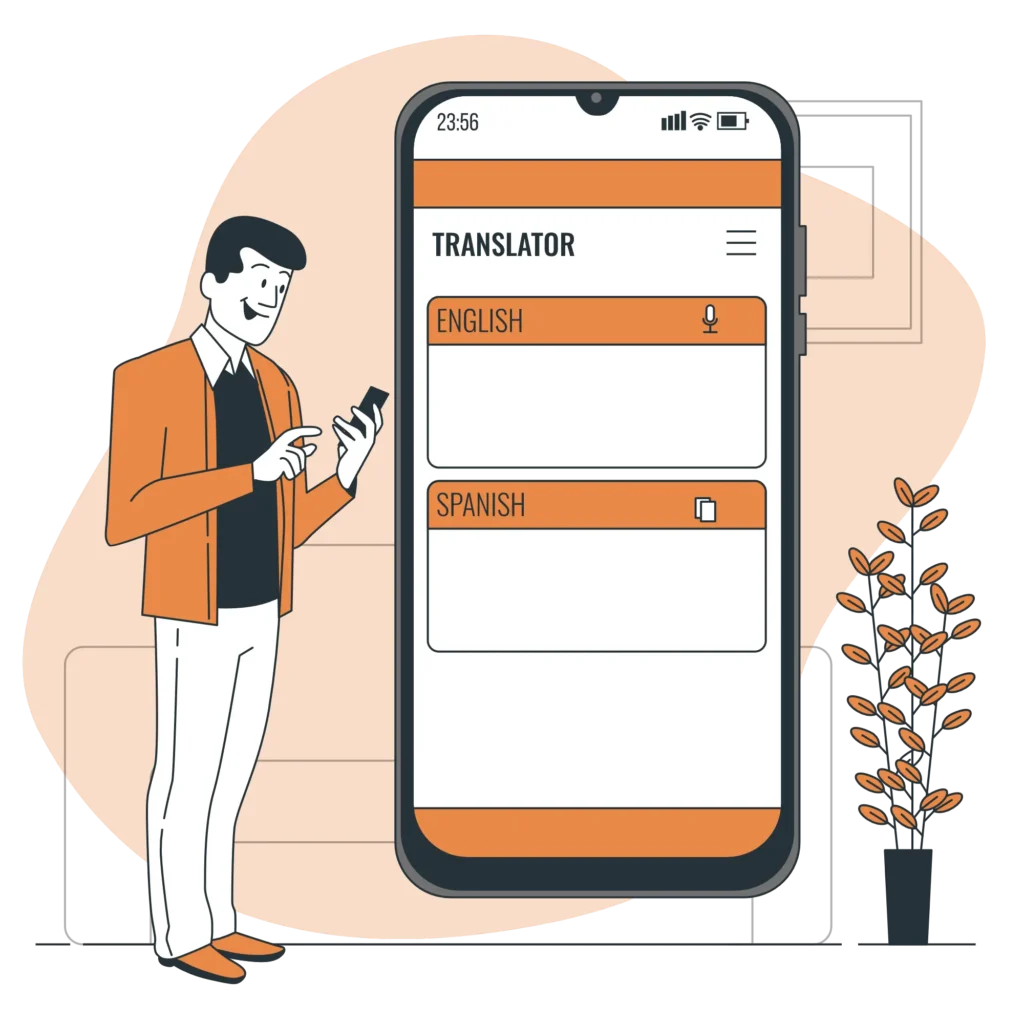
When you type or paste English text into the translator, the system uses advanced linguistic algorithms and translation databases to produce accurate Marathi equivalents.Here’s a simple step by step process:Open the tool in your browser.Type or paste your English sentence.Click “Translate”: your Marathi translation appears instantly.Copy and use the translated text wherever you need.Some advanced tools even offer voice input and real time typing translation, so you can speak in English and see the Marathi text appear instantly.

Everyday Uses of English to Marathi Translation

A good translator is more than just a language tool; it’s a bridge between cultures and contexts. Here are common scenarios where it can help:

Education: Translating assignments, research papers, or study materials.
Travel: Understanding local signboards, menus, and transport guides.
Business: Drafting emails, translating contracts, or localizing product descriptions.
Personal Communication: Messaging relatives, friends, or community groups.
Media & Entertainment: Translating song lyrics, film subtitles, or news articles.

Accuracy: Getting the Best Results

While technology has improved drastically, no translation tool is perfect. To ensure accurate, context aware translations:

Keep sentences clear: Avoid overly complex structures.
Use standard spelling: Incorrect spelling can confuse translation engines.
Avoid slang: Local slang or idioms may not translate correctly.
Check context: Some words may have multiple meanings in Marathi; choose the one that fits your situation.
For example, the English word “bank” could mean a financial institution or the side of a river; only context clarifies the meaning.

Common Challenges and How to Overcome Them

Even the best translators face difficulties when dealing with:

Idiomatic expressions: English idioms like “piece of cake” may not have a direct Marathi equivalent.
Cultural references: Some terms are deeply rooted in local culture and need contextual adaptation.
Complex technical terms: Industry specific jargon may need professional review.
To handle this, you can break complex text into smaller sentences, check synonyms, or cross verify with multiple translation sources.

English to Marathi
English to Marathi

Benefits of a Truly Free, Unlimited Translator

Unlike tools that restrict daily usage or require upgrades, a genuinely free online translator gives you:

Unlimited text length: Translate entire articles, not just short phrases.
24/7 access: Translate anytime without worrying about subscription renewals.
Cross platform convenience: Works on Windows, macOS, Android, iOS, and even older systems.
Privacy and security: No personal information required.


Final Thoughts

The ability to translate English to Marathi online instantly is more than a convenience; it’s a necessity in an interconnected world. With a reliable, no download, no sign up, and truly free translation tool, you can communicate, learn, and connect without limits.

Whether it’s for education, work, travel, or personal use, this technology empowers you to bridge linguistic gaps and embrace new opportunities.

Language should unite, not divide, and with the right tool, English and Marathi can flow seamlessly into one another.

Light post style with image

Show off your recent blog posts in a standard format on the light and soft background with carousal option

Gudi Padwa Wishes in Marathi: 60+ Messages for Family

Gudi Padwa Wishes in Marathi: 60+ Messages for Family

Finding the right gudi padwa wishes in marathi can be harder than it looks. You want something authentic, not a […]
Husband Birthday Wishes in Marathi: 85+ Heartfelt Lines He Will Love

Husband Birthday Wishes in Marathi: 85+ Heartfelt Lines He Will Love

Finding the right husband birthday wishes in Marathi can feel harder than it should. You want something that sounds like […]

Big Boss Marathi: How to Watch, Vote, and Follow Season 5

Big Boss Marathi: How to Watch, Vote, and Follow Season 5

If you are trying to figure out how to watch big boss marathi or just want to know who got […]

How Web Based English to Marathi Translators Work

The mechanics are simpler than most people expect. Type or paste English text, hit translate, and the tool runs it through a language model trained on large volumes of paired English-Marathi text to produce a Devanagari-script output. No account, no download.

Here’s the part that trips people up: the “advanced algorithm” language you see on most translation sites is doing a lot of heavy lifting to describe something closer to pattern matching at scale. It’s not magic, and it’s not infallible. Short, direct sentences translate cleanly almost every time. Longer sentences with nested clauses or ambiguous pronouns are where things start to wobble, the tool has to guess at which noun a pronoun refers back to, and sometimes it guesses wrong.

Typical flow:

  1. Open the tool in your browser, no login screen to click through.
  2. Type or paste your English sentence, or use voice input if you’re speaking rather than typing.
  3. Hit translate. The Marathi text appears in a few seconds.
  4. Copy it out and use it wherever you need, message, document, caption.

Voice input in particular has gotten noticeably better over the past couple of years. It still struggles with strong accents or background noise, worth knowing before you rely on it in a noisy market or a moving car.

Common Challenges and How to Overcome Them

Idiomatic expressions are the most obvious failure point. English idioms rarely have a one-to-one Marathi equivalent, and a literal translation usually reads as nonsense to a native speaker.

Cultural references cause a similar problem. References to specific festivals, foods, or social customs sometimes need contextual adaptation rather than direct translation, something a purely automated tool isn’t going to catch on its own.

Technical or industry-specific jargon is where machine translation genuinely struggles. Legal terms, medical terminology, engineering specs, these need a professional review, full stop. Don’t submit a Marathi-translated contract without having a bilingual speaker check it first.

Grammatical gender trips up more people than anything else on this list. Marathi nouns carry gender, and that gender has to stay consistent with the adjectives, verbs, and pronouns across the whole sentence. English doesn’t work this way, so it’s easy for even a fluent-ish translation to slip on longer sentences.

One practical fix that works reasonably well: break long or complex sentences into two or three shorter ones before translating, then read the output back to check it makes sense as connected thoughts, not just individually correct fragments.

Understanding the Marathi Script: Devanagari

Marathi is written in Devanagari, the same script used for Hindi, Sanskrit, and several other Indian languages, though the pronunciation and vocabulary differ significantly. If you’ve never seen it before, it can look intimidating: no capital letters, a horizontal line running along the top of most words (called the shirorekha), and characters that combine consonants and vowels into single glyphs rather than stringing separate letters together the way English does.

This is part of why a translation tool matters more here than it might for, say, English to French. You can sound out French from the Roman alphabet even if you don’t speak a word of it. Devanagari doesn’t give an English reader that shortcut. A translator that outputs clean Devanagari script, rather than a romanized approximation, is doing something genuinely useful: producing text a Marathi reader can actually read comfortably, not a phonetic guess.

If you need to type Marathi yourself rather than just read a translation, phonetic input tools let you type in Roman letters (“kasa ahes”) and get Devanagari output (“कसा आहेस”) in return. Worth knowing as a companion tool to translation, since typing and translating solve two different problems.

Machine Translation vs. Human Translation: Where the Line Is

It’s worth being upfront about this rather than pretending a browser tool is a substitute for a translator. Machine translation, the kind this site and tools like Google Translate run on, works by predicting the most statistically likely translation based on patterns learned from huge volumes of paired text. It’s fast, free, and good enough for a large share of everyday needs.

Where it falls short: legal documents, medical consent forms, literary or poetic translation, anything where a mistranslation has real consequences or where tone and nuance carry meaning. A certified human translator brings contextual judgment a model doesn’t have, they know when a word choice matters and why, not just which word is statistically probable.

A reasonable rule of thumb: if getting it wrong would cost you money, health, or a legal outcome, hire a person. If you’re messaging a cousin or reading a menu, a machine translator is exactly the right tool for the job.

Marathi Sentence Structure and Why Translations Sometimes Read Oddly

English follows Subject-Verb-Object order: “I ate rice.” Marathi follows Subject-Object-Verb: “मी भात खाल्ला,” which reads literally as “I rice ate.” This isn’t a translation quirk, it’s the actual grammar of the language, and it’s the reason a word-for-word translation from English often sounds backwards or clunky to someone reading the Marathi version.

Good translation tools handle this reordering automatically. Where you’ll still notice friction is in longer sentences with multiple clauses, since Marathi also tends to place modifying phrases and subordinate clauses before the main clause rather than after it, the reverse of typical English structure. If a translated sentence comes out reading strangely, this word-order difference is usually why, not necessarily a translation error.

Regional Variation: Standard Marathi vs. Dialects

“Marathi” isn’t one uniform thing across the state. Standard Marathi, based on the Pune dialect, is what you’ll find in news broadcasts, textbooks, and formal writing, and it’s what most translation tools default to. But spoken Marathi varies meaningfully by region: Varhadi in the Vidarbha belt, a Konkani-influenced coastal variety along the Konkan coast, and the fast, Hindi-inflected Marathi common in Mumbai’s streets.

For most translation needs, standard Marathi is the right choice, it’s understood everywhere and reads as neutral and professional. If you’re translating something meant for a specific regional audience, a village announcement or a local business flyer, it’s worth having a native speaker from that region sanity-check the output, since a word that’s completely standard in Pune can sound stiff or even slightly off in Kolhapur.

This is part of why a translation tool matters more here than it might for, say, English to French. You can sound out French from the Roman alphabet even if you don’t speak a word of it. Devanagari doesn’t give an English reader that shortcut. A translator that outputs clean Devanagari script, rather than a romanized approximation, is doing something genuinely useful: producing text a Marathi reader can actually read comfortably, not a phonetic guess.

If you need to type Marathi yourself rather than just read a translation, phonetic input tools let you type in Roman letters (“kasa ahes”) and get Devanagari output (“कसा आहेस”) in return. Worth knowing as a companion tool to translation, since typing and translating solve two different problems.

Frequently
Asked Questions

A: Google Translate achieves roughly 80-85% accuracy for simple present-tense sentences and common vocabulary. Accuracy drops significantly with complex sentences, idiomatic expressions, and context-dependent gender assignment. It is best used for first drafts and single-word lookups, not for final output without human review.

A: Google Input Tools offers phonetic typing where you type Marathi words in Roman script (e.g., "namaskar") and it converts to Devanagari (नमस्कार). This is available as a web tool, a Chrome extension, and a mobile keyboard. Apple devices have a built-in Marathi transliteration keyboard under Settings, General, Keyboard, Keyboards, Add New Keyboard, Marathi.

A: Most learners and tools struggle most with gender agreement across long sentences. When a sentence contains multiple nouns of different genders, keeping the adjectives, verbs, and pronouns consistent with the correct referent requires tracking grammatical gender across clauses, which English does not train speakers to do.

A: Translation alone teaches vocabulary and some grammar patterns but does not build the intuitive sense of natural phrasing that comes from exposure to original Marathi content. Combine translation practice with reading Marathi news articles, watching Marathi films with subtitles, and listening to Marathi conversations for the best results.

A: Marathi follows a Subject-Object-Verb (SOV) pattern, while English uses Subject-Verb-Object (SVO). This means the verb almost always comes at the end of a Marathi sentence. Additionally, Marathi places modifiers and subordinate clauses before the main clause, which reverses the typical English structure where main clauses come first.

A: Yes. Standard Marathi (based on the Pune dialect) is used in formal writing, news media, and education. However, regional varieties like Varhadi (spoken in the Vidarbha region), Konkani-influenced coastal Marathi, and the Marathi spoken in Mumbai each have distinct vocabulary and pronunciation. Translations intended for a general audience should use Standard Marathi unless you are targeting a specific regional audience.

A: There are some patterns. Nouns ending in आ (ा) are often masculine, nouns ending in ई (ी) are often feminine, and nouns ending in एं (ें) are often neuter. However, there are many exceptions. The only reliable method is checking a good dictionary that marks gender. With practice, you develop an intuition for the common patterns and the frequent exceptions.

A: Both mean "you," but आपण is more formal and respectful, typically used with elders, strangers, and in professional settings. तुम्ही is slightly less formal, used with peers and acquaintances. The distinction is similar to the difference between "usted" and "tú" in Spanish. Using आपण when तुम्ही is expected sounds overly stiff; using तुम्ही when आपण is expected can sound disrespectful.

Scroll to Top