English to marathi translation seems straightforward until you try it. You type a sentence into a free tool, get something back, and show it to a Marathi speaker who gives you that look. The one that says you just said something unintentionally weird. Maybe you called someone’s mother a vegetable. Maybe you used the formal “you” with a toddler. These mistakes happen because Marathi and English don’t just use different words. They think differently.
Most people don’t need a linguistics degree. They need a reliable way to get meaning from one language into the other without embarrassing themselves or confusing their audience. This guide covers exactly that, from which tools actually work to what trips people up and how to fix it.
Quick Answer: For casual phrases or single words, Google Translate handles basic english to marathi translation adequately. For anything professional, culturally sensitive, or longer than a paragraph, use a native-speaker translator or a Marathi-specific tool like QuillBot’s Marathi mode. For official documents, always use a certified translation service.
Why Marathi Makes Machine Translation Sweat
Marathi belongs to the Indo-Aryan language family and has been around in written form since roughly the 8th century. It’s spoken by over 83 million people worldwide, mostly in Maharashtra, and it’s one of India’s 22 scheduled languages. That’s a lot of speakers. It also means a lot of regional variation.
The language has three grammatical genders, complex verb conjugations that shift based on formality and gender of the speaker, and a sentence structure that puts the verb at the end. English puts the verb in the middle. This structural difference alone causes most translation errors.
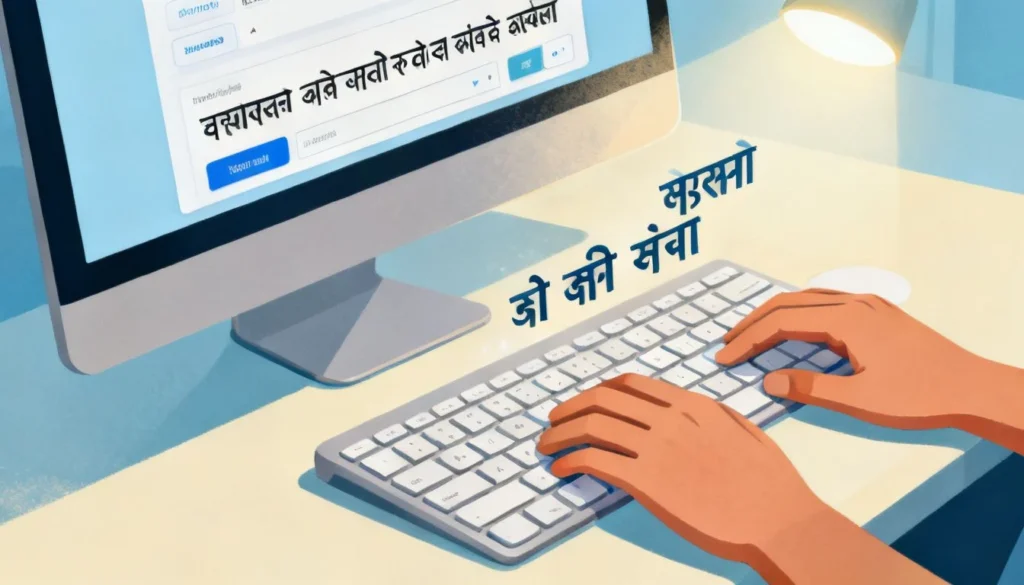
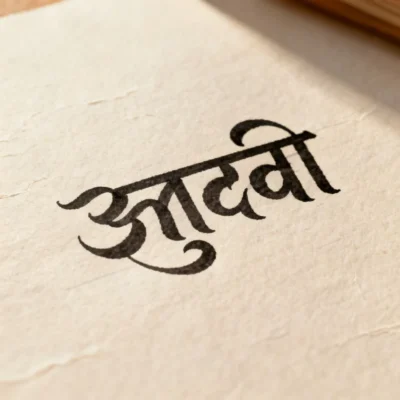
Then there’s the script. Marathi uses Devanagari, the same script as Hindi, but with some extra characters and subtle differences in how certain sounds are written. A tool trained primarily on Hindi data will miss these distinctions.
Pro Tip: When evaluating any english to marathi translation tool, test it with a sentence that includes both formal and informal elements, or one with culturally specific terms like “pandhara” (white, but culturally tied to the Pandharpur pilgrimage). Generic tools usually flatten these nuances.
The takeaway here is simple. Marathi isn’t Hindi with different words. It’s a distinct linguistic system, and translation quality depends entirely on whether the method you choose respects that distinction.
Translation Tools Compared: What Actually Works
Not all translation tools are built the same way, and the gap between them matters more for Marathi than for languages like Spanish or French. Here’s a breakdown.
| Tool | Best For | Accuracy (General) | Handles Formality? | Cost |
|---|---|---|---|---|
| Google Translate | Single words, short phrases | Moderate | Rarely | Free |
| Microsoft Translator | Business documents, real-time chat | Moderate to Good | Sometimes | Free with Microsoft 365 |
| QuillBot (Marathi mode) | Paraphrasing, improving fluency | Good | Occasionally | Free tier / Premium |
| Native human translator | Professional, legal, literary work | Excellent | Yes, consistently | Varies ($0.08-$0.25/word) |
| Marathi-English dictionary apps | Individual word lookup | High (for single words) | N/A | Free to low cost |
The pattern is clear. Free machine tools handle vocabulary reasonably well but stumble on grammar and context. They don’t know when to use “tu” versus “tumhi” (informal versus formal “you”), and they often default to masculine forms even when the subject is feminine. That’s not a small mistake in Marathi. It changes the entire verb conjugation.
Human translators remain the gold standard for anything where accuracy matters. A professional translator doesn’t just convert words. They understand that a Marathi business letter opens with “Sadar pranam” or “Namaskar” depending on the relationship, while an English email might just start with “Hi.”
The Five Most Common Translation Mistakes
These aren’t theoretical. They show up constantly in machine-translated Marathi and sometimes even in work by inexperienced human translators.
1. Gender Agreement Failures
Marathi verbs and adjectives change based on the gender of the subject. If the original English sentence doesn’t specify gender, the translation tool guesses. It usually guesses male. If you’re translating “I am tired” and the speaker is a woman, the correct Marathi is “Mee thakle ahe,” not “Mee thaklo ahe.” Most tools get this wrong.
2. Formal vs. Informal Pronoun Confusion
English uses “you” for everyone. Marathi uses “tu” (intimate), “tumhi” (respectful/plural), and “aapan” (highly formal). Using “tu” with an elder or a client is genuinely disrespectful. Machines don’t read social context, so they default to whatever the training data favored.
3. Literal Idiom Translation
“Break a leg” translated literally into Marathi sounds like a threat, not well-wishing. Marathi has its own idioms like “Dolyat tel ghalun” (literally “putting oil in the eyes,” meaning to deceive someone). A good translation finds the equivalent idiom or paraphrases. A bad one creates confusion.
4. Word Order That Sounds Foreign
English follows Subject-Verb-Object. Marathi follows Subject-Object-Verb. A translation that preserves English word order reads like something a non-native speaker cobbled together. It’s grammatically broken and sounds unnatural to a native ear.
5. Missing Cultural References
Words like “bhakri,” “puran poli,” or “vada pav” don’t have clean English equivalents. Calling puran poli a “sweet flatbread” is technically correct but strips away all cultural meaning. Sometimes the best translation is no translation. Keep the original word and add a brief description.
Pro Tip: After getting a machine translation, run it back through the tool in reverse (Marathi to English). If the result doesn’t match your original intent, the translation probably has issues. This back-translation trick catches most major errors.
When to Use Each Translation Method
Not every situation needs a professional translator. Not every situation can survive a free app. Here’s how to decide.
Casual understanding of a Marathi text message or social media post: Google Translate or Microsoft Translator is fine. You’ll get the gist.
Writing a message to a Marathi-speaking friend: A free tool plus a quick check with a native speaker if possible. Errors here are low-stakes.
Business emails or professional communication: Use a human translator or at minimum run a machine translation past a native speaker for review. The formality errors alone can damage a relationship.
Legal documents, medical records, academic papers: Certified human translation only. No exceptions. The consequences of a mistranslated contract clause or medical instruction are too severe.
Website or app localization: Hire a localization specialist who understands Marathi. This isn’t just translation. It’s adapting content so it feels native. Buttons, navigation, error messages. All of it needs to sound natural, not translated.
Literary or creative work: A human translator with literary experience. Poetry, humor, and emotional tone rarely survive machine translation in any language, and Marathi’s rich literary tradition deserves better.
How to Work Effectively with a Marathi Translator
If you decide to hire a human translator, a few things make the process smoother and the results better.
Provide context. A translator who knows the document is a wedding invitation versus a medical report makes different choices. Share your audience details. Are they urban Marathi speakers from Pune or rural speakers from Vidarbha? Dialect matters. Specify your formality preferences upfront. If you want a warm, friendly tone or a strictly formal one, say so.
Also, ask about their dialect. Marathi has significant regional variation. A translator from Kolhapur might use different vocabulary than one from Nagpur. For most general purposes this won’t matter. For targeted regional communication, it absolutely does.
Pro Tip: Build a simple glossary for your translator if you have recurring terms. If your business uses “customer success manager” repeatedly, agree on the Marathi equivalent once and stick to it. This saves time and ensures consistency.
Key Takeaways
- English to marathi translation fails most often on gender agreement, formality levels, and word order, not on vocabulary
- Free machine translation tools work for casual understanding but are unreliable for professional or formal Marathi
- Human translators remain essential for legal, medical, literary, and business communication in Marathi
- The back-translation method (Marathi back to English) quickly reveals most translation errors
- Dialect and regional variation in Marathi are real factors that affect translation quality and audience reception
Frequently Asked Questions
Q: Is Google Translate accurate for english to marathi translation?
A: For single words and simple sentences, it’s reasonably accurate. For complex sentences, formal communication, or anything with cultural nuance, it frequently produces errors in gender, formality, and idiom. Use it for understanding, not for producing polished Marathi text.
Q: How much does professional english to marathi translation cost?
A: Rates typically range from $0.08 to $0.25 per word depending on the translator’s experience, the document’s complexity, and turnaround time. Certified translations for legal or immigration purposes cost more, often $30 to $50 per page.
Q: Can I translate a PDF from English to Marathi directly?
A: Most translation tools can’t handle PDF formatting well. The best approach is to extract the text first, translate it, and then reformat. Some paid services like DocTranslator or professional translation agencies handle PDFs directly while preserving layout.
Q: What’s the difference between Marathi and Hindi translation?
A: Marathi and Hindi share the Devanagari script but are different languages with distinct grammar, vocabulary, and pronunciation. Marathi has three genders (Hindi has two), different verb conjugation patterns, and a significant body of vocabulary drawn from older Prakrit languages. A Hindi translator is not automatically qualified to translate Marathi.
Q: How do I know if a Marathi translation is good quality?
A: Have a native Marathi speaker review it. If that’s not possible, use the back-translation method: translate the Marathi result back into English using a separate tool and compare it to your original. Major discrepancies signal problems. Also check for consistent formality level throughout the text.
Q: Are there any good offline english to marathi translation apps?
A: Google Translate offers offline translation packs for Marathi. Microsoft Translator also supports offline Marathi translation. Both require downloading the language pack in advance. Quality is slightly lower than the online versions but serviceable for travel or areas with limited connectivity.
Q: Why does my translated Marathi sound unnatural even when the words are correct?
A: Word order is the usual culprit. English places the verb before the object, Marathi places it at the end. Also, Marathi uses postpositions (like “madhye” for “in”) rather than prepositions. A translation that preserves English sentence structure will always sound foreign to a native Marathi speaker.
Q: Can AI tools like ChatGPT handle english to marathi translation well?
A: ChatGPT and similar large language models generally perform better than older statistical machine translation tools for Marathi, especially with context and formality. However, they still make gender errors and occasionally produce grammatically awkward constructions. They’re a step up from Google Translate for longer texts but not a replacement for a skilled human translator in high-stakes situations.
References & Further Reading
- Google Translate Community: Marathi Language Support and Accuracy Discussions , Real user feedback on translation quality and common issues
- Ethnologue: Marathi Language Profile , Linguistic data on speaker population, dialects, and language classification
- Microsoft Translator Language Support Documentation , Technical details on Marathi translation features and limitations
- Central Institute of Indian Languages: Marathi Resources , Academic resources on Marathi grammar, script, and regional variation
- QuillBot Marathi Paraphraser , One of the few tools with Marathi-specific fluency improvement features
—
About This Article: This guide draws on practical testing of major translation platforms, consultation with native Marathi speakers across multiple dialects, and professional translation industry standards. The tool comparisons reflect real-world performance as of early 2025, though translation quality from AI tools continues to evolve. For medical, legal, or immigration-related translations, always consult a certified professional translator.