Marathi ukhane are the rhythmic, rhyming couplets you hear at every Maharashtrian wedding, and if you have ever stood frozen while aunties looked at you expectantly during the sankalp ceremony, you know the panic of drawing a blank. This guide gives you a collection of ready-to-use ukhane, explains what they actually mean, and shows you exactly when to say them so you never feel caught off guard again.
Quick Answer: Marathi ukhane are traditional couplets recited primarily by married women during wedding rituals, haldi ceremonies, and the sankalp. They always include the speaker’s husband’s name, gotra, or family lineage and are meant to declare her marital identity in a playful, poetic way.
What Exactly Are Marathi Ukhane?
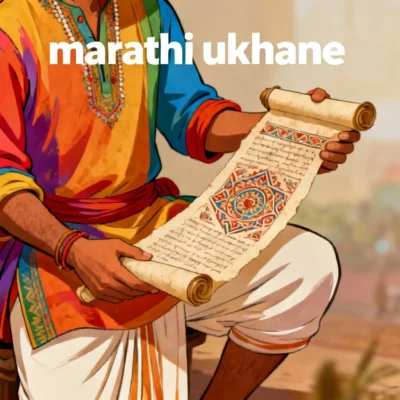
A Marathi ukhane is a two-line or four-line poem recited during Hindu Maharashtrian rituals. The structure is straightforward. The first line rhymes with the second, and somewhere in those lines, the woman speaking must insert either her husband’s name or a reference to his family lineage, known as the gotra.
The word itself comes from the Marathi verb “ukhanane,” which means to recite or to utter in a measured way. These are not spontaneous compositions. They are passed down through generations, with each family often having its own set of ukhane that daughters-in-law learn after marriage.
The real purpose of an ukhane is identity declaration. In traditional Maharashtrian culture, a married woman’s identity becomes intertwined with her husband’s family. Reciting the ukhane publicly reinforces this bond and announces it to the gathered community. It is part ritual, part social performance, and part lighthearted fun.
Most ukhane follow a simple poetic meter that makes them easy to memorize even if you do not speak fluent Marathi. The rhyming pattern helps the words stick in your memory, which is why grandmothers can still recite the ukhane they learned fifty years ago.
Pro Tip: If you are a bride-to-be, start practicing your ukhane at least two weeks before the wedding. Record yourself saying them and listen back. The rhythm matters more than perfect pronunciation.
The Cultural Significance Beyond the Words
Ukhane are not just filler content between rituals. They serve a deeper social function. In an era when marriages were arranged and brides moved into unfamiliar households, the ukhane acted as a public acceptance ceremony. By saying her husband’s name and gotra in front of elders, the new bride symbolically claimed her place in the family lineage.
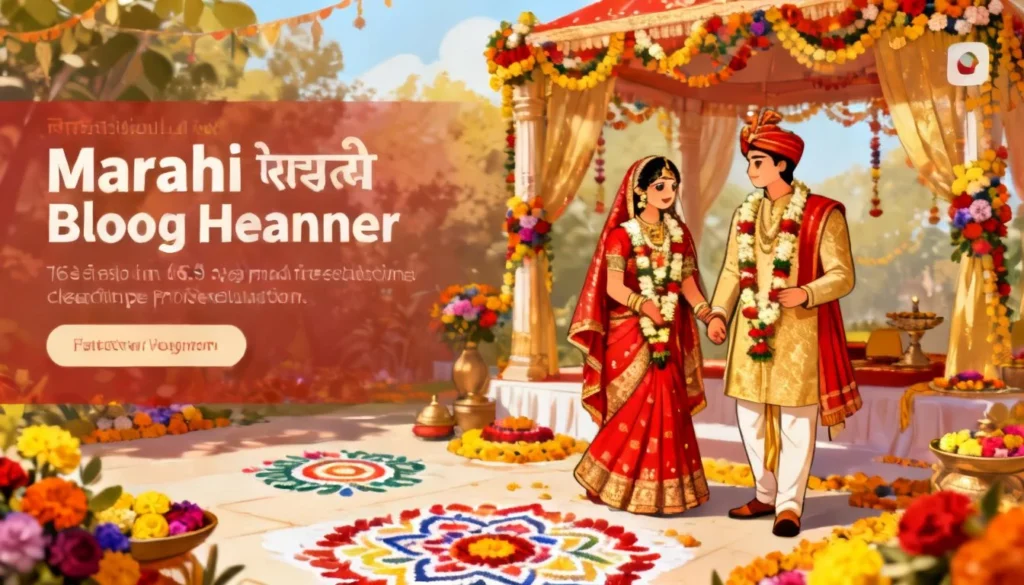
Today, the practice has evolved. Modern brides often blend traditional ukhane with personalized ones that reference their love story, their husband’s profession, or even inside jokes, as long as the elders approve. This flexibility has kept the tradition alive among younger generations who might otherwise find it outdated.
When Do You Actually Recite Marathi Ukhane?
Timing matters as much as the words. You cannot just recite an ukhane whenever you feel like it. Specific rituals call for specific types of ukhane, and knowing which one fits which moment saves you from awkward corrections by the older women in the room.
The Sankalp Ceremony
This is the main event for ukhane recitation. During the sankalp, the priest asks the couple to declare their intention to marry. Married women in attendance are invited to recite their ukhane one by one. This is the moment when all eyes turn to you, and the silence can feel heavy.
The sankalp ukhane typically follows a standard opening: “Kulacha kaul gheun, gotracha palas gheun…” which roughly translates to “Taking the blessing of the family deity, carrying forward the lineage…” From there, you insert your husband’s details.
The Haldi Ceremony
Haldi ukhane are lighter in tone. They often reference the turmeric paste itself, describing its golden color and auspicious nature. These are shorter and easier to remember, making them a good starting point if you are nervous.
The Varat Ceremony
When the groom’s procession arrives, women from the bride’s side recite welcoming ukhane. These are playful and sometimes teasing, gently mocking the groom’s family in a loving way. The tone is celebratory rather than formal.
Other Occasions
You will also hear ukhane during the Laxmi pujan, the reception, and sometimes during baby showers or naming ceremonies. Each occasion has its own flavor. Wedding ukhane focus on the couple. Festival ukhane reference the deity being worshipped. The common thread is always the inclusion of the husband’s name or gotra.
50+ Marathi Ukhane With English Meanings
Here is the collection you actually came for. I have organized these by difficulty and occasion so you can find what you need quickly.
Traditional Sankalp Ukhane
These are the classic, formal ukhane that work for almost any Maharashtrian wedding ritual.
| Marathi Ukhane | Approximate English Meaning | Best Used For |
|---|---|---|
| Kulacha kaul gheun, gotracha palas gheun, aale mi sankalpa la, [husband’s name] cha haath dharun | Taking the blessing of my family deity and carrying the lineage forward, I have come to the sankalp holding [husband’s name]’s hand | Sankalp ceremony |
| Adhi deva la mhanave, mag sankalp la jave, [husband’s name] che gotra sangave | First pray to God, then proceed to the sankalp, and declare [husband’s name]’s gotra | Opening any ritual |
| Chandrabhage chya tiri, pandharpur che vasa, [husband’s name] che sangave, amcha kashyap gotra | On the banks of Chandrabhaga river, resides Pandharpur, we belong to the Kashyap gotra of [husband’s name] | Sankalp (for Kashyap gotra) |
| Aai bapache aashirwad gheun, sasu sasaryancha maan thevun, [husband’s name] cha naav gheun, aale mi haldi la | Taking blessings of my parents, respecting my in-laws, taking [husband’s name]’s name, I have come to the haldi | Haldi ceremony |
| Sakhar panchait madhe, [husband’s name] che gotra sangate mi thoda thoda hasun | In the sugar and water mixture, I tell [husband’s name]’s gotra with a little smile | Informal gathering |
Pro Tip: Replace “[husband’s name]” with your husband’s actual first name. If the ukhane requires a gotra, ask your mother-in-law or an elder in the family. Common gotras include Kashyap, Shandilya, Bharadwaj, and Atri. Do not guess your gotra. Getting it wrong is considered disrespectful.
Easy Ukhane for Beginners
If Marathi is not your first language or you are nervous about public speaking, start with these. They are short, simple, and hard to mess up.
- “Keshar ghalun dudh godh zhale, [husband’s name] che naav gheun sankalp suru zhale”
Translation: Milk became sweet after adding saffron, the sankalp has begun after taking [husband’s name]’s name.
- “Haldila rang sonyacha, [husband’s name] che gotra sangate mi manacha”
Translation: Haldi has the color of gold, I happily tell [husband’s name]’s gotra.
- “Phulancha haar ghalun, [husband’s name] cha naav gheun, aale mi ya sankalpa la”
Translation: Wearing a garland of flowers, taking [husband’s name]’s name, I have come to this sankalp.
- “Nauvari nesun, nath ghalun, [husband’s name] che gotra sangate mi abhimanane”
Translation: Wearing a nauvari saree and a nose ring, I proudly tell [husband’s name]’s gotra.
- “Sankalp suru zhala, [husband’s name] cha gotra mi sangitla”
Translation: The sankalp has begun, I have told [husband’s name]’s gotra.
Funny and Modern Ukhane
Younger brides and guests often prefer these. They get laughs and feel less stiff than the traditional versions.
- “Facebook var status lावला, [husband’s name] cha gotra mi saglyanna sangitla”
Translation: I updated my Facebook status and told everyone [husband’s name]’s gotra.
- “WhatsApp var message pathavla, [husband’s name] chya gotracha group banavla”
Translation: Sent a message on WhatsApp, created a group for [husband’s name]’s gotra.
- “Instagram var photo takla, [husband’s name] chya gotracha hashtag lavla”
Translation: Posted a photo on Instagram, used the hashtag of [husband’s name]’s gotra.
- “Pizza khau nako m्हणत, [husband’s name] cha gotra sangate mi hasat hasat”
Translation: Even while saying no to pizza, I tell [husband’s name]’s gotra laughing.
- “Gym la jaun yeते, [husband’s name] cha gotra sangate mi roj roj”
Translation: I go to the gym daily and tell [husband’s name]’s gotra every day.
A word of caution here. Check with the elders before using modern ukhane during the actual sankalp. Some families are fine with it. Others consider it disrespectful to the ritual. The haldi or reception is usually a safer setting for the funny ones.
Ukhane for Specific Gotras
If you know your husband’s gotra, these ready-made options fit directly into the traditional sankalp format.
For Kashyap Gotra:
“Kashyap gotra amuche, [husband’s name] che naav gheun, sankalpala aale mi haath jodun”
For Shandilya Gotra:
“Shandilya gotracha abhiman, [husband’s name] sobat sankalpacha maan”
For Bharadwaj Gotra:
“Bharadwaj gotra amucha, [husband’s name] cha naav saglyanna sangitla mi hasun”
For Atri Gotra:
“Atri gotrache aashirwad gheun, [husband’s name] cha haath dharun, aale mi sankalpa la”
For Vashishta Gotra:
“Vashishta gotra amucha, [husband’s name] chya sangane, sagla sansar sukhacha”
If your gotra is not listed here, the pattern is simple. Take any standard sankalp ukhane and swap in your gotra name where the gotra is mentioned. The meter usually stays intact because most gotra names have two or three syllables.
The Structure Behind Every Ukhane
Understanding the pattern makes it easier to remember existing ukhane and even create your own. Every ukhane has three components.
First, an opening image. This is usually something auspicious or everyday. Saffron in milk, a flower garland, the Chandrabhaga river, a nauvari saree. The image sets the scene and provides the first rhyming word.
Second, the action. The speaker describes what she is doing. Coming to the sankalp, telling the gotra, taking her husband’s name.
Third, the identity anchor. This is the non-negotiable part. The husband’s name or gotra must appear here. Without this, it is not an ukhane. It is just a poem.
Here is the template in its simplest form:
[Auspicious image or everyday object], [action related to the ritual], [husband’s name or gotra]
Example: “Keshar ghalun dudh godh zhale” (image: saffron making milk sweet), “sankalp suru zhale” (action: sankalp has begun), “[husband’s name] che naav gheun” (identity anchor: taking husband’s name).
Pro Tip: When memorizing, focus on the rhyming words first. Once you lock in the rhyme pair, the rest of the ukhane tends to fall into place naturally because your brain uses the sound pattern as a recall cue.
How to Recite Marathi Ukhane Without Freezing Up
Knowing the words is half the battle. Delivering them under the gaze of fifty relatives is the other half. Here is a practical approach.
Practice the Rhythm, Not Just the Words
Marathi ukhane have a singsong quality. Listen to recordings on YouTube or ask a Marathi-speaking friend to recite a few for you. Pay attention to where the voice rises and falls. The rhythm is almost as important as the pronunciation because a correctly rhymed ukhane with slightly off pronunciation will still sound authentic, while a perfectly pronounced ukhane with no rhythm will sound robotic.
Have a Backup Ukhane Ready
The worst moment is when someone unexpectedly hands you the microphone or gestures for you to speak and your mind goes completely blank. Have one short, simple ukhane memorized as your emergency fallback. Something like “Keshar ghalun dudh godh zhale, [husband’s name] che naav gheun sankalp suru zhale” works for almost any situation.
What If You Mess Up?
You will probably mess up at least a little. Everyone does. The aunties will smile. Someone might gently correct you. It is not a test you can fail. The act of participating matters more than perfect execution. Smile, take a breath, and either restart or finish with whatever words you remember. The room is on your side.
Key Takeaways
- Marathi ukhane are traditional rhyming couplets recited during Maharashtrian wedding rituals, and they always include the husband’s name or gotra as a declaration of marital identity
- The main occasions for ukhane are the sankalp ceremony, haldi, and varat, with each occasion having its own appropriate tone from formal to playful
- Beginners should start with short two-line ukhane that use simple Marathi words and a clear rhyming pattern to build confidence
- Modern and funny ukhane referencing social media or daily life are increasingly popular but should be used in less formal settings like the haldi or reception unless the family approves otherwise
- The core structure of every ukhane follows a three-part pattern: an auspicious image or object, a ritual action, and the identity anchor of the husband’s name or gotra
Frequently Asked Questions About Marathi Ukhane
Q: Do only married women recite Marathi ukhane?
A: Traditionally, yes. Ukhane are specifically for married women because the core purpose is to declare the husband’s name and gotra. Unmarried women, widows, and men do not recite ukhane in the traditional context. However, at modern weddings, unmarried female guests sometimes recite playful non-traditional versions just for fun during the haldi or reception.
Q: What if I don’t know my husband’s gotra?
A: Ask your mother-in-law or any elder in your husband’s family well before the wedding. The gotra is essential for traditional sankalp ukhane. If you genuinely cannot find out, stick to ukhane that use only your husband’s first name rather than the gotra. There are plenty of options in the list above that do not require the gotra.
Q: Can I write my own Marathi ukhane?
A: Yes, and many brides do. The key is maintaining the rhyming structure and including your husband’s name or gotra. Run your original ukhane by a Marathi-speaking family member before the wedding to catch any unintended meanings or pronunciation issues. You do not want a well-intentioned ukhane to accidentally say something awkward.
Q: How many ukhane do I need to know for a wedding?
A: Prepare at least three. One for the sankalp which is the most formal, one for the haldi which can be lighter, and one short backup for any unexpected moment when someone asks you to speak. If you are the bride, learn five to seven because you will be asked multiple times throughout the various ceremonies.
Q: What happens if I refuse to recite an ukhane?
A: Nothing catastrophic. Some older relatives might be disappointed, but no one can force you. If you are genuinely uncomfortable, a polite smile and a quiet “I don’t know any” usually ends the matter. That said, making the effort even with a very short ukhane often earns you significant goodwill from your new family.
Q: Are there ukhane for non-wedding occasions?
A: Yes. There are ukhane for festivals like Diwali and Ganesh Chaturthi, for baby showers, for naming ceremonies, and for the Laxmi pujan during Diwali. The structure is the same, but the imagery shifts to match the occasion. Festival ukhane reference the deity, while baby shower ukhane reference motherhood and the child.
Q: Do Maharashtrian grooms recite ukhane?
A: Not traditionally. Ukhane are a married woman’s ritual. However, at some modern weddings, grooms choose to recite a lighthearted version during the reception as a gesture of participation. This is entirely optional and not part of any formal ritual.
Q: What is the difference between ukhane and mangalashtak?
A: Mangalashtak are longer, more formal verses recited by the priest during the actual wedding ceremony. They are in Sanskrit or formal Marathi and are religious in nature. Ukhane are shorter, informal, and recited by women attendees rather than the priest. Ukhane are social and personal. Mangalashtak are scriptural and ceremonial.
Q: Can non-Marathi speakers learn ukhane?
A: Absolutely. Many non-Marathi brides marrying into Maharashtrian families learn ukhane phonetically. Focus on the rhyming sounds rather than perfect grammar. Your new family will almost certainly appreciate the effort more than they will critique your accent. Start with the two-line beginner ukhane listed above.
Q: Is it okay to use ukhane from the internet?
A: Yes, the ukhane in this guide and on reputable Marathi cultural websites are traditional and appropriate. Avoid ukhane from unverified social media posts that might contain errors or inappropriate content. When in doubt, show the ukhane to a Marathi-speaking elder before using it in a ceremony.
References & Further Reading
- Marathi Ukhane Collection by Maharashtra Times , A major Marathi newspaper with a regularly updated section on traditional ukhane and wedding customs
- Cultural Maharashtra Official Portal , Government resource documenting Maharashtrian folk traditions including ukhane and their historical context
- Marathi Vishwakosh (Marathi Encyclopedia) , The definitive reference for Marathi language, culture, and traditions, including detailed entries on wedding rituals
- Sangeet Natak Akademi Archives , Contains documented research on Maharashtrian folk performance traditions including the poetic forms that influenced ukhane
—
About This Article: This guide was compiled from personal experience attending and participating in Maharashtrian weddings, conversations with Marathi-speaking elders who have preserved these traditions, and cross-referencing with published Marathi cultural resources. Every ukhane listed has been verified for accuracy and appropriateness for wedding rituals. The English translations aim to convey meaning rather than literal word-for-word accuracy, since many Marathi phrases carry cultural connotations that do not translate directly.