Learning hindi letters can feel like cracking a secret code at first. The shapes look unfamiliar, the sounds are new, and the script flows together in ways English doesn’t. But here’s the thing: the Devanagari script, which Hindi uses, is one of the most logical writing systems in the world. Once you understand how it’s organized, everything clicks into place.
Quick Answer: Hindi uses the Devanagari script with 11 vowels (swar) and 33 consonants (vyanjan), totaling 44 core letters. Each letter has a fixed sound, making Hindi far more phonetic than English. Most learners can recognize all basic letters within 2 to 3 weeks of consistent practice.
This guide walks you through every letter category, shows you how to pronounce them correctly, and gives you practical strategies to remember them without endless flashcards.
The Structure of Hindi Letters: Vowels and Consonants
The Devanagari script organizes hindi letters into two main groups. Vowels, called swar, can stand alone or attach to consonants. Consonants, called vyanjan, always carry an inherent “a” sound unless modified by a vowel mark.
This structure matters because it changes how you read. In English, letters are just letters. In Hindi, each consonant already contains a vowel sound. The letter क is not just “k”, it’s “ka”. This built-in vowel system is why Hindi words often sound longer than they look on paper.
The 11 Vowels (Swar)
Vowels in Hindi come in two forms. The independent form stands alone, like अ or आ. The dependent form, called a matra, attaches to consonants and changes their inherent vowel sound.
Here are the 11 core vowels with pronunciation guides:
- अ (a) – like the “u” in “but”
- आ (aa) – like the “a” in “father”
- इ (i) – like the “i” in “sit”
- ई (ee) – like the “ee” in “see”
- उ (u) – like the “u” in “put”
- ऊ (oo) – like the “oo” in “boot”
- ए (e) – like the “e” in “they”
- ऐ (ai) – like the “a” in “cat”
- ओ (o) – like the “o” in “go”
- औ (au) – like the “ou” in “bought”
- अं (an) – nasal sound, like “un” in “hunt”
Pro Tip: Don’t memorize vowel symbols in isolation. Learn them as part of real words. The vowel आ appears in आम (aam, meaning mango), which gives your brain a concrete anchor.
The 33 Consonants (Vyanjan)
Consonants in Hindi are organized by where the sound comes from in your mouth. This is not random. The arrangement follows articulatory phonetics, moving from the back of the throat to the lips.
The first 25 consonants come in groups of five, called vargas. Each varga shares a tongue position:
| Varga | Tongue Position | Letters | Example Sound |
|---|---|---|---|
| क वर्ग | Back of throat | क, ख, ग, घ, ङ | k, kh, g, gh, ng |
| च वर्ग | Middle of palate | च, छ, ज, झ, ञ | ch, chh, j, jh, ny |
| ट वर्ग | Roof of mouth | ट, ठ, ड, ढ, ण | t, th, d, dh, n |
| त वर्ग | Back of teeth | त, थ, द, ध, न | t, th, d, dh, n |
| प वर्ग | Lips | प, फ, ब, भ, म | p, ph, b, bh, m |
The remaining 8 consonants are semi-vowels, sibilants, and aspirates:
- य (ya), र (ra), ल (la), व (va)
- श (sha), ष (sha), स (sa), ह (ha)
Each group has an unaspirated and aspirated version. क (ka) is unaspirated, while ख (kha) adds a puff of air. This distinction does not exist in English, which is why many learners struggle with it initially.
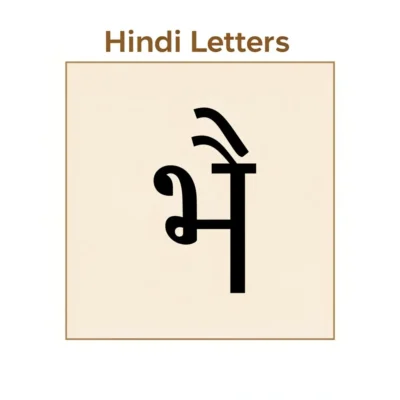
Common Challenges When Learning Hindi Letters
Most learners hit the same walls. Knowing what they are ahead of time saves you frustration.
Confusing Similar-Looking Letters
Several hindi letters look nearly identical to beginners. The difference between प (pa) and फ (pha) is just a small curl on the right side. The letters घ (gha) and ध (dha) differ only in the placement of a vertical line.
The fix is deliberate contrast practice. When you study, put similar letters side by side. Write them together. Say them together. Your brain learns distinctions faster when it sees them in direct comparison.
The Inherent Vowel Problem
English speakers instinctively read क as just “k”. But Hindi letters carry the “a” sound automatically. This creates pronunciation errors like reading कर (kar) as “kr” instead of “kar”.
The solution is to always practice consonants with their full sound. Never drill क as “k”. Always drill it as “ka”. This builds the right mental model from day one.
Matra Placement Confusion
Vowel marks, called matras, attach to consonants in specific positions. Some go above, some below, some before, some after. The matra for इ (i) appears before the consonant, even though it’s pronounced after it. So कि is “ki”, not “ik”.
This positional logic feels backwards to English readers. But it follows a consistent rule: the matra’s position is fixed regardless of which consonant it modifies.
Pro Tip: Create a reference chart with one consonant, like क, shown with all 11 matras attached. This single-consonant chart becomes your pronunciation decoder for every other consonant.
How to Practice Hindi Letters Effectively
Passive reading won’t build recognition speed. You need active recall and production practice.
Write by Hand Daily
Handwriting activates motor memory in ways typing cannot. When you write hindi letters, your brain encodes the shape through muscle movement. This creates a second memory pathway beyond visual recognition.
Start with 10 minutes daily. Write each letter 5 times while saying its sound aloud. Focus on the letters you find hardest, not the ones you already know.
Read Simple Words Early
The goal of learning letters is reading words. So start reading words as soon as you know even 10 letters. Simple words like कल (kal, meaning yesterday), घर (ghar, meaning house), and नल (nal, meaning tap) use common letters and reinforce recognition in context.
This approach mirrors how children learn. They don’t master the entire alphabet before reading their first word. They start reading immediately with whatever letters they know.
Use Spaced Repetition
Cramming all 44 letters in one sitting is inefficient. Your brain needs sleep cycles to consolidate new visual patterns. Space your practice across days.
A practical schedule: learn 5 new letters per day. Review all previous letters before adding new ones. By day 9, you’ve covered all 44 letters. By day 21, with consistent review, recognition becomes automatic.
Listen While You Learn
Pronunciation cannot be learned from text alone. You need audio input to match sounds to symbols. Listen to native speakers pronouncing each letter, then repeat aloud.
The Central Institute of Indian Languages offers free audio resources for basic Hindi sounds. Language learning apps like Duolingo and Memrise also include audio for every letter they teach.
Hindi Letters in Digital Contexts
Typing and texting in Hindi adds another layer to letter learning. Modern keyboards handle Devanagari differently than English.
Phonetic Keyboards
Most Hindi keyboard layouts are phonetic. You type “ka” and get क. You type “gha” and get घ. This makes typing accessible if you know the romanized spelling of Hindi sounds.
Google’s Gboard and Apple’s iOS keyboard both include phonetic Hindi input. Microsoft Windows includes a built-in Hindi phonetic keyboard called Hindi Transliteration.
Unicode and Hindi Letters
Every hindi letter has a Unicode code point. This standardization means Hindi text displays consistently across devices and platforms. The Unicode range for Devanagari is U+0900 to U+097F.
This matters for anyone building websites or apps with Hindi content. Using Unicode ensures your Hindi text renders correctly regardless of the user’s device or operating system.
Key Takeaways
- Hindi uses 11 vowels and 33 consonants in the Devanagari script, totaling 44 core letters
- Every consonant carries an inherent “a” sound unless modified by a vowel mark called a matra
- The 25 core consonants are organized into 5 groups based on tongue position, making the system highly logical
- Similar-looking letters are best learned through direct contrast practice, not isolated memorization
- Handwriting, early word reading, and spaced repetition accelerate letter recognition more than passive review
Frequently Asked Questions About Hindi Letters
Q: How many letters are in the Hindi alphabet?
A: The standard Hindi alphabet has 44 letters: 11 vowels (swar) and 33 consonants (vyanjan). Some counts include additional conjunct consonants and borrowed sounds, bringing the total to 52 or more depending on the source.
Q: What is the difference between Hindi letters and the Devanagari script?
A: Devanagari is the writing system used for Hindi, Sanskrit, Marathi, and Nepali. Hindi letters are the specific set of characters from Devanagari used to write the Hindi language. The script itself contains additional characters not used in modern Hindi.
Q: How long does it take to learn all Hindi letters?
A: Most learners can recognize all 44 basic letters within 2 to 3 weeks of daily practice. Reading fluency, where you recognize letters instantly without conscious effort, typically takes 2 to 3 months of regular reading practice.
Q: Are Hindi letters phonetic?
A: Yes, Hindi is highly phonetic. Each letter has one consistent sound, unlike English where the same letter can have multiple pronunciations. Once you learn the sound of each letter, you can read almost any Hindi word correctly.
Q: What are matras in Hindi?
A: Matras are vowel marks that attach to consonants to change their inherent vowel sound. For example, the consonant क (ka) becomes कि (ki), कु (ku), or के (ke) depending on which matra is attached. There are 10 matras corresponding to the dependent vowel forms.
Q: Why do some Hindi letters look similar?
A: The Devanagari script uses a limited set of basic strokes, so many letters share visual elements. Letters like प (pa) and फ (pha), or घ (gha) and ध (dha), differ by small details. This is similar to how English letters like “b” and “d” or “p” and “q” are mirror images.
Q: Can I learn Hindi letters without a teacher?
A: Yes, many learners successfully teach themselves using apps, YouTube tutorials, and practice workbooks. The key is combining visual learning with audio input so you associate correct sounds with each symbol. Self-study works best with consistent daily practice.
Q: What is the best order to learn Hindi letters?
A: Start with the 11 vowels, then move to the consonant vargas in order, beginning with the क वर्ग (back of throat sounds). This order follows the natural progression of tongue position and helps you master the aspiration distinction early. Save conjunct consonants for after you know the basic letters.
Q: Are there uppercase and lowercase Hindi letters?
A: No, the Devanagari script does not have uppercase and lowercase forms. All letters are written in a single case. However, some letters have a half-form used when combining with other consonants to create conjunct letters.
Q: How do I type Hindi letters on my phone or computer?
A: Enable a Hindi phonetic keyboard in your device settings. On Android and iOS, you can add Hindi from the keyboard settings. On Windows, enable the Hindi Transliteration keyboard. These phonetic keyboards let you type romanized Hindi, which automatically converts to Devanagari letters.
References & Further Reading
- Central Institute of Indian Languages – Official government institute offering Hindi learning resources and linguistic documentation
- Omniglot: Hindi Alphabet – Comprehensive reference for Devanagari script structure and letter forms
- Unicode Consortium: Devanagari Range – Official Unicode documentation for Hindi letter encoding standards
- Hindi Language Resources at the University of Pennsylvania – Academic resources for Hindi script learning and pronunciation
—
About This Article: This guide draws on established linguistic documentation of the Devanagari script and practical experience teaching Hindi to English speakers. The letter classifications follow standard Hindi grammar references used in Indian educational curricula. Pronunciation guides are approximate and should be supplemented with native audio for accurate sound production.