Getting the Marathi letter format right matters more than most people realize. A poorly structured patra can confuse the reader or even come across as disrespectful. This guide breaks down the exact structure for formal and informal letters in Marathi, with clear examples you can copy and adapt today.
Quick Answer: A standard Marathi letter format includes the sender’s address and date at the top right, the recipient’s address on the left, a respectful salutation like “आदरणीय” (Aadaraniya) for formal letters, a clear body with 2 to 3 paragraphs, and a polite closing phrase followed by your signature. Formal letters also include a subject line (विषय) after the salutation.
The Two Main Types of Marathi Letters
Marathi letters fall into two broad categories, and the format differs significantly between them. Knowing which one to use is the first step.
औपचारिक पत्र (Formal Letter)
Formal letters in Marathi follow a strict structure. You will use this format for job applications, complaints to government offices, requests to school principals, or business correspondence.
The key elements are:
- प्रेषकाचा पत्ता (Sender’s address) at the top left
- दिनांक (Date) below the sender’s address
- प्राप्तकर्त्याचा पत्ता (Recipient’s address) on the left side
- विषय (Subject line) written as a single clear phrase
- संबोधन (Salutation) using आदरणीय महोदय/महोदया
- मुख्य भाग (Body) divided into 2 to 3 short paragraphs
- समारोप (Closing) with phrases like “आपला विश्वासू” or “धन्यवाद”
- सही (Signature) with your name below
Pro Tip: In formal Marathi letters, never use “मी” (I) in the first sentence. Start directly with the purpose, like “खालील विषयाबाबत मी हे पत्र लिहित आहे” only after establishing context. Better yet, begin with the subject reference itself.
अनौपचारिक पत्र (Informal Letter)
Informal letters to family and friends are far more relaxed. You write these to your parents, siblings, cousins, or close friends.
The structure is simpler:
- पत्ता आणि दिनांक (Address and date) at the top right
- संबोधन (Salutation) like “प्रिय आई” or “प्रिय मित्रा”
- कुशल विचारणा (Well-being inquiry) in the first paragraph
- मुख्य मजकूर (Main content) in a conversational tone
- समारोप (Closing) with “तुझा मुलगा” or “तुझी मैत्रीण”
- सही (Signature or name)
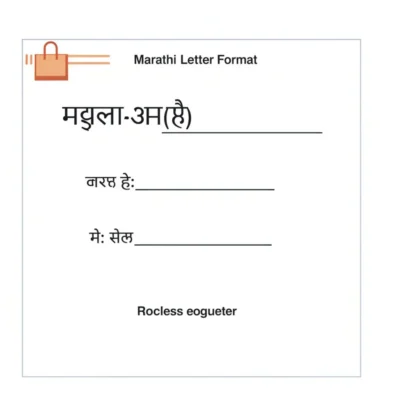
Formal Marathi Letter Format: Step by Step Breakdown
Let’s walk through each component of a formal Marathi letter so you can see exactly how it fits together.
The Header Block
The sender’s address sits at the top left corner in formal Marathi letters. This is different from English formal letters where the sender’s address often goes on the right.
Write it like this:
“
सुरेश पाटील

१२, शिवाजी नगर,

पुणे - ४११००५
The date (दिनांक) goes directly below the sender's address. Marathi dates traditionally follow the format "दिनांक १५ ऑगस्ट २०२४" using Marathi numerals for the day.
The Recipient's Address and Subject Line
Below the date, leave one line and write the recipient's address on the left side. Include their designation if applicable:
`
प्रति,

मुख्याध्यापक,

शासकीय माध्यमिक विद्यालय,

सातारा
The subject line (विषय) comes after the salutation in Marathi, not before it like in English. This is a common mistake. Write "विषय:" followed by a brief phrase that captures the letter's purpose.
Pro Tip: Keep the subject line under 8 words. A long subject line defeats its purpose. For example, "विषय: दोन दिवसांच्या रजेसाठी अर्ज" is perfect. "विषय: मला दोन दिवसांची रजा मंजूर करावी यासाठी विनंती करणारे पत्र" is too long.
The Body and Closing
The body of a formal Marathi letter typically has three paragraphs:
- First paragraph: State the purpose directly. No warm-up lines.
- Second paragraph: Provide necessary details, dates, or supporting information.
- Third paragraph: Make your request clear and express gratitude.
Close with a respectful phrase like "आपला विश्वासू" (Yours faithfully) or "आपली आज्ञाधारक" (Yours obediently, used by students). Sign your name below.
Informal Marathi Letter Format: What Changes
Informal letters give you breathing room. You can express warmth, ask about family members, and use colloquial Marathi.
Opening an Informal Letter
Start with the sender's address and date at the top right corner. Then greet the recipient warmly. Common openings include:
- "प्रिय आई," (Dear Mother)
- "प्रिय बाबा," (Dear Father)
- "प्रिय मित्रा," (Dear Friend, male)
- "प्रिय मैत्रिणी," (Dear Friend, female)
The first paragraph should ask about the recipient's well-being. "तू कसा आहेस?" (How are you?) or "तुझी तब्येत कशी आहे?" (How is your health?) are standard.
Pro Tip: In informal Marathi letters, you can switch between तू (informal "you") and तुम्ही (respectful "you") depending on your relationship with the recipient. Using तुम्ही for elders shows respect even in informal settings. Match the pronoun to how you actually speak to that person.
Closing an Informal Letter
End with warm, personal phrases:
- "तुझा मुलगा," (Your son)
- "तुझी मुलगी," (Your daughter)
- "तुझा मित्र," (Your friend)
- "तुझी मैत्रीण," (Your friend, female)
Write your name below the closing phrase. No formal signature block needed.
Marathi Letter Format: Formal vs Informal Comparison
Here is a quick reference table showing how the two formats differ:
Element
Formal Letter (औपचारिक)
Informal Letter (अनौपचारिक)
Sender's address position
Top left
Top right
Subject line (विषय)
Required
Not used
Salutation
आदरणीय महोदय/महोदया
प्रिय [name/relation]
Tone
Respectful, direct
Warm, conversational
Body length
2 to 3 focused paragraphs
Flexible, can be longer
Closing
आपला विश्वासू, धन्यवाद
तुझा मुलगा, तुझी मैत्रीण
Pronouns
तुम्ही/आपण always
तू or तुम्ही depending on relationship
Common Mistakes in Marathi Letter Writing
Even native Marathi speakers make errors when writing letters. Here are the most frequent ones and how to avoid them.
Mistake 1: Wrong Subject Line Placement
Many people place the subject line before the salutation, following English convention. In Marathi, the विषय comes after the salutation. This is a small detail that immediately signals whether you know the format or not.
Mistake 2: Mixing Formal and Informal Pronouns
Using तू in a formal letter is a serious error. Always use तुम्ही or आपण in formal correspondence. Mixing them mid-letter confuses the reader and undermines the respectful tone.
Mistake 3: Overly Long Introductions
Formal Marathi letters should get to the point quickly. Starting with "मी आशा करतो की तुम्ही स्वस्थ असाल" (I hope you are well) is unnecessary in a formal patra. Begin with the matter at hand.
Pro Tip: Read your letter aloud after writing it. If any sentence sounds awkward when spoken, rewrite it. Marathi is a phonetic language, and written Marathi should flow naturally when read aloud. This simple check catches most tone and structure problems.
Mistake 4: Incorrect Date Format
The date in Marathi letters should use the Marathi calendar format or the standard Gregorian format with Marathi numerals. Writing "15/08/2024" is acceptable in some contexts, but "दिनांक १५ ऑगस्ट २०२४" is more appropriate for formal letters.
Sample Marathi Letter Format: A Complete Example
Here is a complete formal Marathi letter following the correct format:
`
सुरेश पाटील

१२, शिवाजी नगर,

पुणे - ४११००५
दिनांक १५ ऑगस्ट २०२४
प्रति,

मुख्याध्यापक,

शासकीय माध्यमिक विद्यालय,

सातारा
आदरणीय महोदय,
विषय: दोन दिवसांच्या रजेसाठी अर्ज
स. न. वि. वि.,
मी आपल्या शाळेतील इयत्ता दहावीचा विद्यार्थी आहे. माझ्या घरी एक धार्मिक कार्यक्रम असल्यामुळे मला दिनांक २० ऑगस्ट ते २१ ऑगस्ट या कालावधीत शाळेत उपस्थित राहता येणार नाही.
तरी कृपया मला दोन दिवसांची रजा मंजूर करावी ही विनंती. रजा संपल्यानंतर मी गृहपाठ पूर्ण करून आणीन.
धन्यवाद.
आपला विश्वासू,“
सुरेश पाटील
इयत्ता दहावी, विभाग 'अ'
This example covers all the structural elements: sender’s address, date, recipient’s address, salutation, subject line, body with clear purpose, polite closing, and signature with identification.
Key Takeaways
- The Marathi letter format differs significantly between formal (औपचारिक) and informal (अनौपचारिक) letters
- Formal letters place the sender’s address on the left and include a subject line (विषय) after the salutation
- Use तुम्ही or आपण always in formal letters; तू is acceptable only in informal letters to close friends or younger relatives
- The subject line should be under 8 words and placed after the salutation, not before
- Informal letters start with a well-being inquiry and use warm, personal closing phrases like “तुझा मुलगा”
- Reading your letter aloud helps catch tone and structure issues before sending
Frequently Asked Questions About Marathi Letter Format
Q: What is the correct Marathi letter format for a school leave application?
A: A school leave application follows the formal format: sender’s address at top left, date below it, recipient’s address (principal’s designation and school name), salutation “आदरणीय महोदय/महोदया,” subject line “विषय: रजेसाठी अर्ज,” a brief body stating the reason and dates, closing with “आपला विश्वासू” or “आपली आज्ञाधारक,” and your name with class and division.
Q: Where should the subject line go in a Marathi formal letter?
A: The subject line (विषय) goes after the salutation in Marathi formal letters. This is different from English format where the subject line comes before the salutation. Write “विषय:” followed by a brief phrase, then begin the body of the letter.
Q: What is the difference between औपचारिक and अनौपचारिक पत्र?
A: औपचारिक पत्र (formal letters) are written for official purposes like job applications, complaints, or requests to authorities. They follow a strict structure with a subject line and use respectful pronouns. अनौपचारिक पत्र (informal letters) are written to family and friends, have a relaxed structure, no subject line, and use warm personal language.
Q: How do I write the date in a Marathi letter?
A: Write “दिनांक” followed by the date in Marathi numerals and the month name. For example, “दिनांक १५ ऑगस्ट २०२४” uses Marathi numerals for the day and year with the Marathi month name. Using the English format like “15/08/2024” is acceptable in informal letters but not preferred in formal ones.
Q: What salutation should I use in a formal Marathi letter?
A: Use “आदरणीय महोदय” (Respected Sir) for a male recipient or “आदरणीय महोदया” (Respected Madam) for a female recipient. If you know the recipient’s name and designation, you can include it: “आदरणीय श्री. शर्मा” or “आदरणीय सौ. देशपांडे.”
Q: Can I use तू in a formal Marathi letter?
A: No. Always use तुम्ही or आपण in formal letters. Using तू in a formal context is considered disrespectful. Reserve तू for informal letters to close friends, siblings, or younger relatives where that is how you naturally address them in conversation.
Q: What is the proper closing phrase for a Marathi formal letter?
A: Common formal closing phrases include “आपला विश्वासू” (Yours faithfully), “धन्यवाद” (Thank you), “आपली आज्ञाधारक” (Yours obediently, for students), and “कृपया विनंतीची दखल घ्यावी” (Please take note of my request). Choose based on your relationship with the recipient and the letter’s purpose.
Q: How long should a formal Marathi letter body be?
A: A formal Marathi letter body should be 2 to 3 short paragraphs. The first paragraph states the purpose, the second provides details, and the third makes the request clear with a polite closing. Avoid writing more than one page for most formal letters.
Q: What is the format for addressing the recipient in a Marathi letter?
A: Write “प्रति,” (To,) followed by the recipient’s designation and address on the left side below the date. For example: “प्रति, मुख्याध्यापक, शासकीय माध्यमिक विद्यालय, सातारा.” If you are writing to an individual, use their name and address.
Q: How do I write an informal Marathi letter to my mother?
A: Start with your address and date at the top right. Greet her with “प्रिय आई,” and ask about her health and well-being in the first paragraph. Share your news and thoughts in a warm, conversational tone. Close with “तुझा मुलगा” or “तुझी मुलगी” followed by your name. No subject line is needed.
References & Further Reading
- Maharashtra State Board Marathi Textbook (Balbharati) , Official curriculum resource covering patra lekhan for standards 5 through 10
- Marathi Vishwakosh (Marathi Encyclopedia) , Government of Maharashtra’s comprehensive Marathi language reference
- Central Institute of Indian Languages , Research institute with resources on Marathi language structure and usage
- Sahitya Akademi , India’s national academy of letters with Marathi literature resources
—
About This Article
This guide was written based on standard Marathi language conventions taught in Maharashtra state board schools and used in professional correspondence across Maharashtra. The format follows the structure outlined in the Balbharati Marathi textbooks, which are the authoritative reference for Marathi letter writing in India. The examples provided reflect common real-world usage patterns for both formal and informal letters.
Pingback: Marathi for NRI People: A Practical Guide to Reconnecting
Pingback: Italian Translation: How to Get Accurate Results Without…