Finding the right life partner through Marathi matrimony is a journey that blends tradition with modern practicality. Whether you are searching for yourself or helping a family member, the process can feel overwhelming at first. This guide breaks down exactly how Marathi matrimony works today, what matters most to families, and how to approach the search with clarity instead of confusion. You will learn the key steps, common mistakes to avoid, and how to combine cultural expectations with your own preferences.
Quick Answer: Marathi matrimony refers to the structured process of finding a marriage partner within the Marathi-speaking community, typically involving family involvement, horoscope matching (kundali), biodata exchange, and platforms ranging from traditional matchmakers to modern matrimonial websites.
Understanding Marathi Matrimony Culture
Marathi matrimony is not just about finding a spouse. It is a family-centered process where parents, relatives, and sometimes close family friends play an active role. The community places strong emphasis on cultural compatibility, educational background, and family reputation. Unlike Western dating culture, the expectation is often that the families will vet each other as thoroughly as the prospective bride and groom.
The typical sequence looks like this:
- Family discussions about readiness for marriage
- Creating a biodata (resume-style profile)
- Registering on matrimonial platforms or contacting a matchmaker
- Initial screening based on community, caste, education, and horoscope
- Family-to-family meetings
- One-on-one conversations between the prospective couple
- Engagement and wedding planning
Each step matters. Skipping one can create friction later. But the process has also evolved significantly in the last decade, with younger Marathi singles taking more initiative while still respecting family input.
Pro Tip: Before you create any profile, have an honest conversation with your parents about non-negotiables versus preferences. This prevents wasted meetings and awkward situations later.
The Role of Community and Sub-Community
Within Marathi matrimony, sub-community plays a significant role. Families often prefer matches from the same or compatible subgroups, including Deshastha Brahmin, Chitpavan (Konkanastha), CKP, Maratha, 96 Kuli Maratha, Kunbi, Mali, Teli, and others. Some families are flexible on this, while others consider it a firm requirement.
Understanding where your family stands on sub-community preference is one of the first practical steps. It narrows the search considerably and saves time for everyone involved.
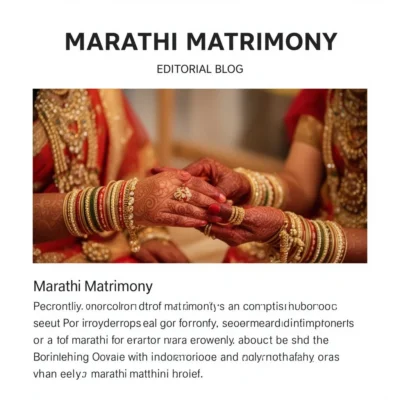
Creating a Strong Marathi Matrimony Biodata
The biodata is your first impression. In Marathi matrimony, it carries more weight than a casual dating profile ever could. Families read biodata carefully, often printing them out for discussion. A weak biodata gets passed over quickly.
What a Good Biodata Includes
- Full name and date of birth (for horoscope matching)
- Height, weight, and complexion (still commonly requested)
- Educational qualifications with institution names
- Current profession and employer
- Annual income range (sometimes included, sometimes shared privately)
- Family details including parents’ professions, siblings, and their marital status
- Gotra and rashi (lineage and moon sign)
- Expectations for the partner (education, profession, location, family background)
- Contact preferences (usually a parent’s phone number or email first)
The biodata should be one page. Anything longer gets skimmed. Use clear headings, avoid clutter, and include a recent photograph. Photos matter more than many people admit. A clear, well-lit photo with a genuine smile creates a better impression than an overly formal studio shot.
Pro Tip: Write the “expectations” section carefully. Being too rigid can eliminate good matches before you ever speak to them. Phrase expectations as preferences, not demands.
Common Biodata Mistakes
| Mistake | Why It Hurts | Better Approach |
|---|---|---|
| Missing photograph | Families often skip profiles without photos | Always include a clear, recent photo |
| Vague profession details | Creates doubt about stability | Name the company and role specifically |
| No family information | Families want to know the background | Include parents’ professions and siblings |
| Overly long biodata | Gets skimmed or ignored | Keep it to one page |
| Unrealistic expectations | Filters out potentially good matches | Be honest but flexible |
A strong biodata opens doors. A careless one closes them before you ever get a chance to speak.
Horoscope Matching in Marathi Matrimony
Horoscope matching, or kundali milan, remains a cornerstone of Marathi matrimony for many families. The system uses Ashtakoota matching, which assigns points across eight compatibility factors. A score of 18 out of 36 is generally considered the minimum acceptable threshold, with scores above 24 seen as favorable.
The eight factors are:
- Varna (spiritual compatibility)
- Vashya (mutual attraction and control)
- Tara (health and longevity)
- Yoni (physical and sexual compatibility)
- Graha Maitri (mental compatibility)
- Gana (temperament)
- Bhakoot (emotional compatibility)
- Nadi (genetic and health compatibility)
Mangal dosha (Mars affliction) is another critical consideration. If one partner has mangal dosha and the other does not, some families will reject the match outright. Others seek remedies or accept it if other factors are strong.
When Horoscope Matching Conflicts With Personal Choice
This is where modern Marathi matrimony gets complicated. A match may feel right emotionally, but the horoscopes may not align. Some families are strict about this. Others have become more flexible, especially in urban areas and among younger generations.
The practical approach is to understand your family’s stance early. If horoscope matching is non-negotiable for them, get the kundalis checked before you invest emotionally in a match. If they are flexible, focus on the human compatibility first and treat astrology as one factor among many.
Pro Tip: If you are not religious about astrology but your family is, get the kundali checked by a trusted astrologer early in the process. It is easier to filter matches at the biodata stage than after you have developed feelings.
Choosing the Right Marathi Matrimony Platform
The platform you choose shapes the entire search experience. Marathi matrimony platforms range from large national sites with Marathi sections to community-specific services. Each has strengths and weaknesses.
Major Platform Types
| Platform Type | Examples | Best For | Limitations |
|---|---|---|---|
| Large matrimonial sites | Shaadi.com, BharatMatrimony, Jeevansathi | Broad reach, many filters | Can feel impersonal, lots of competition |
| Marathi-specific platforms | MarathiMatrimony (BharatMatrimony), Marathi Vivah Mandal services | Community focus, cultural alignment | Smaller user base |
| Community WhatsApp groups | Various regional groups | Free, word-of-mouth | Unverified profiles, privacy concerns |
| Traditional matchmakers | Local mediators, family connections | Personal touch, pre-vetted | Limited reach, slower process |
| Newspaper matrimonial ads | Lokmat, Sakal, Maharashtra Times classifieds | Traditional families, older generation | Limited detail, no photos |
Most families use a combination. A paid membership on a major matrimonial site, plus active participation in community networks, plus family connections. The paid sites offer better filtering and privacy controls, which matters when you are sharing personal information.
What to Look For in a Platform
- Verification features (phone, ID, or social verification)
- Privacy controls (who can see your photo and contact details)
- Community filters (sub-community, mother tongue, location)
- Active user base (stale profiles waste your time)
- Mobile app quality (most browsing happens on phones now)
Free accounts are nearly useless on most matrimonial sites. You can browse but not contact anyone meaningfully. A paid membership is worth the investment if you are serious about the search.
How Families Evaluate Matches
Understanding how Marathi families evaluate potential matches helps you present yourself effectively. The evaluation is often more thorough than the biodata suggests.
What Families Actually Care About
Education and profession rank at the top. A stable career signals responsibility and future security. For women, families often look for education level and whether she will work after marriage. For men, income stability and career trajectory matter most.
Family background comes second. Parents want to know about the family’s reputation, values, and lifestyle. They will ask about siblings, parents’ professions, family businesses, and sometimes even extended family. This is not nosiness. It is risk assessment.
Location preferences matter practically. Many families prefer matches from the same city or region to make visits easier. Others are open to relocation if the career demands it.
Lifestyle compatibility has become more important in recent years. Diet preferences (vegetarian vs. non-vegetarian), alcohol consumption, smoking habits, and religious observance are discussed more openly than they were a generation ago.
Pro Tip: Be honest about lifestyle habits from the start. Hiding a smoking habit or dietary preference creates problems after marriage. It is better to filter out incompatible matches early than to deal with conflict later.
The First Family Meeting
The first family meeting sets the tone for everything that follows. In Marathi matrimony, this is often a formal occasion hosted at the bride’s or groom’s home. Both families dress well, bring sweets, and engage in structured conversation.
What happens at a typical first meeting:
- Introductions and small talk
- Discussion of family background and professions
- Questions about education, career plans, and lifestyle
- The prospective couple may get a chance to speak privately
- Light refreshments or a meal
- Both families leave to discuss internally before responding
Preparation matters. Families research each other beforehand. They may ask mutual contacts about reputation. They observe how the family treats each other, how the home is maintained, and how the prospective partner behaves.
Modern Trends in Marathi Matrimony
Marathi matrimony has evolved significantly. The process is more collaborative between parents and children than it was even fifteen years ago. Young Marathi professionals are taking active roles in shortlisting, communicating, and deciding.
What Has Changed
Women are more vocal about career expectations. Many Marathi women now state clearly whether they plan to continue working after marriage. Families increasingly accept and even prefer working women.
The conversation window has lengthened. Couples now spend weeks or months talking before committing. Phone calls, video chats, and in-person meetings are all part of the process. This is a significant shift from the faster decision timelines of previous generations.
Inter-caste and inter-community matches are more common, though still not the norm. Urban families are more open, while rural and traditional families remain conservative.
Privacy has improved. Many platforms now allow users to control who sees their photos and contact details. This is a meaningful change from the days when biodata circulated freely without consent.
What Has Stayed the Same
Family involvement remains central. Even the most independent young Marathi professionals usually involve their parents in the final decision. The family’s blessing still matters.
Horoscope matching persists. Even families that claim not to be religious often check the kundali as a matter of tradition.
Community preference remains strong. Most Marathi families still prefer a Marathi-speaking partner, even if they are flexible on sub-community and caste.
Key Takeaways
- Marathi matrimony is a family-centered process that combines cultural expectations with personal compatibility
- A strong one-page biodata with a clear photo is your most important first step
- Horoscope matching remains significant for many families, so understand your family’s stance early
- The right matrimonial platform depends on your community, budget, and privacy needs
- Families evaluate education, profession, family background, and lifestyle compatibility most closely
- Modern Marathi matrimony allows more time for couples to talk before deciding, which improves match quality
- Honesty about lifestyle habits and expectations prevents problems after marriage
Frequently Asked Questions
Q: What is the best Marathi matrimony site?
A: MarathiMatrimony by BharatMatrimony is the most popular Marathi-specific platform. Shaadi.com and Jeevansathi also have strong Marathi user bases. The best site depends on your sub-community, location, and whether you prefer a Marathi-only platform or a larger national one with Marathi filters.
Q: How important is horoscope matching in Marathi matrimony?
A: Horoscope matching remains important for many Marathi families, particularly the Ashtakoota system and Mangal dosha check. However, its importance varies by family. Urban and younger families tend to treat it as one factor among many, while traditional families may make it a firm requirement.
Q: What should I include in a Marathi matrimony biodata?
A: A Marathi matrimony biodata should include your name, date of birth, height, education, profession, income range, family details, gotra and rashi, expectations for your partner, and a recent photograph. Keep it to one page and use clear formatting.
Q: How long does the Marathi matrimony process typically take?
A: The timeline varies widely. Some matches are finalized within two to three months. Others take a year or more. Factors include how actively you search, how specific your criteria are, and how much time you spend getting to know each match before deciding.
Q: Is it acceptable to talk to multiple matches at the same time?
A: Yes, in the early stages. Most families and individuals talk to multiple prospects simultaneously. However, once a match becomes serious and families have met, it is generally expected that you will focus on that match exclusively. Being transparent about where you are in the process prevents misunderstandings.
Q: What role do parents play in modern Marathi matrimony?
A: Parents typically play a significant role in shortlisting, initiating contact, and family meetings. However, the final decision increasingly rests with the prospective couple. Most modern Marathi families expect the couple to talk extensively and confirm compatibility before committing.
Q: How do I handle rejection in Marathi matrimony?
A: Rejection is common and usually not personal. Families have specific criteria that may not align with your profile. The healthiest approach is to treat rejection as a filter that saves you from an incompatible match. Keep moving forward and do not dwell on individual rejections.
Q: Are inter-caste Marathi marriages becoming more accepted?
A: Acceptance is growing, particularly in urban areas and among younger families. However, it is still not the norm, and traditional families may resist. If inter-caste marriage is important to you, be upfront about it early to avoid wasting time with families who will not accept it.
Q: What is the difference between Marathi matrimony and regular matrimony?
A: Marathi matrimony specifically focuses on the Marathi-speaking community, with emphasis on Marathi cultural practices, sub-community considerations, and regional preferences. Regular matrimony platforms are broader and may not offer the same community-specific filters and cultural context.
Q: How much does a Marathi matrimony site membership cost?
A: Paid memberships on major matrimonial sites typically range from approximately ₹3,000 to ₹15,000 for three to six months, depending on the platform and features. Community WhatsApp groups and traditional matchmakers are often free or charge nominal fees.
References & Further Reading
- BharatMatrimony Marathi Matrimony – The largest Marathi-specific matrimonial platform with community filters and verified profiles
- Shaadi.com – One of India’s largest matrimonial sites with significant Marathi user base
- Jeevansathi – Major matrimonial platform with Marathi community options
- Wikipedia: Marathi People – Background on Marathi culture, sub-communities, and marriage traditions
- Wikipedia: Hindu Astrology – Context on Ashtakoota matching and kundali milan
—
About This Article
This guide draws on extensive research into Marathi matrimony practices, including platform analysis, community discussions, and documented cultural traditions. The practical advice reflects common patterns across Marathi families in Maharashtra and the diaspora. Specific family practices may vary based on sub-community, region, and individual family preferences.