Getting an accurate English-to-Sinhala translation is harder than most people expect. The two languages do not just use different words. They think differently. Sentence structures flip around. Words that seem simple in English sometimes have no direct equivalent in Sinhala, and the other way around too. If you have ever pasted a sentence into a free tool and gotten back something a Sinhala speaker laughed at, you already know the gap between word swapping and real translation.
This guide walks through the actual problems that cause bad translations, the tools that handle Sinhala better than others, and the techniques that produce results a native speaker would actually use. Whether you are translating a single phrase, a business document, or building something that needs ongoing translation, the approach changes.
Quick Answer: For casual phrases, Google Translate handles basic english to sinhala translation reasonably well but struggles with idioms, formal registers, and longer sentences. For anything professional, Madura Online or a native-speaking human translator is the safer path. The best results always come from understanding the structural differences between the two languages before relying on any tool.
Why English to Sinhala Translation Breaks So Often
The root problem is structural. English belongs to the Germanic language family. Sinhala is an Indo-Aryan language with Dravidian influences, and it has its own script, its own word order, and a grammatical system that does not map neatly onto English categories.
Word Order Flips Everything
English follows a Subject-Verb-Object pattern. You say “I eat rice.” Sinhala follows a Subject-Object-Verb pattern. You say “Mama bath kaanawa,” which literally translates as “I rice eat.” When a translation tool processes English linearly and tries to slot in Sinhala words one after another, the result is word salad. The verb lands in the wrong spot, and the sentence stops making sense to a native reader.
This gets worse with complex sentences. An English sentence like “The man who bought the car from the dealer near the temple yesterday is my uncle” contains embedded clauses that Sinhala handles with participles and a completely different nesting structure. A tool that does not reorder the entire sentence before translating will produce something unreadable.
The Formality Gap Has No English Equivalent
Sinhala has a built-in politeness system that English lacks entirely. The same sentence changes its verb form, pronouns, and sometimes its nouns depending on who you are talking to. Speaking to a friend uses one register. Speaking to an elder, a monk, a teacher, or a stranger uses another. Speaking about yourself humbly uses yet another.
English has “please” and “thank you” and that is about it. A translation tool that does not know the intended audience will default to a neutral register that sounds either oddly stiff or accidentally rude. If you translate a business email into Sinhala without specifying formality, you risk addressing a client the way you would address your younger sibling. That is not a small mistake in Sri Lankan culture.
Words That Do Not Exist in Both Directions
Some English concepts have no Sinhala word. “Privacy” as a standalone concept does not have a perfect Sinhala equivalent. Translators often approximate it with phrases meaning “secrecy” or “personal matters,” neither of which captures the English meaning exactly. Similarly, Sinhala has words for extended family relationships that English collapses into “aunt” or “uncle.” The Sinhala word “loku amma” means your mother’s older sister specifically. English just says “aunt.” When translating Sinhala to English, that specificity vanishes. When translating English to Sinhala, the tool has to guess which aunt you mean.
Pro Tip: Before translating any english to sinhala translation project, decide on the formality level and the dialect. Formal written Sinhala differs noticeably from spoken Sinhala. A document meant for a government office should use the formal register, even if a conversational tone would sound friendlier.
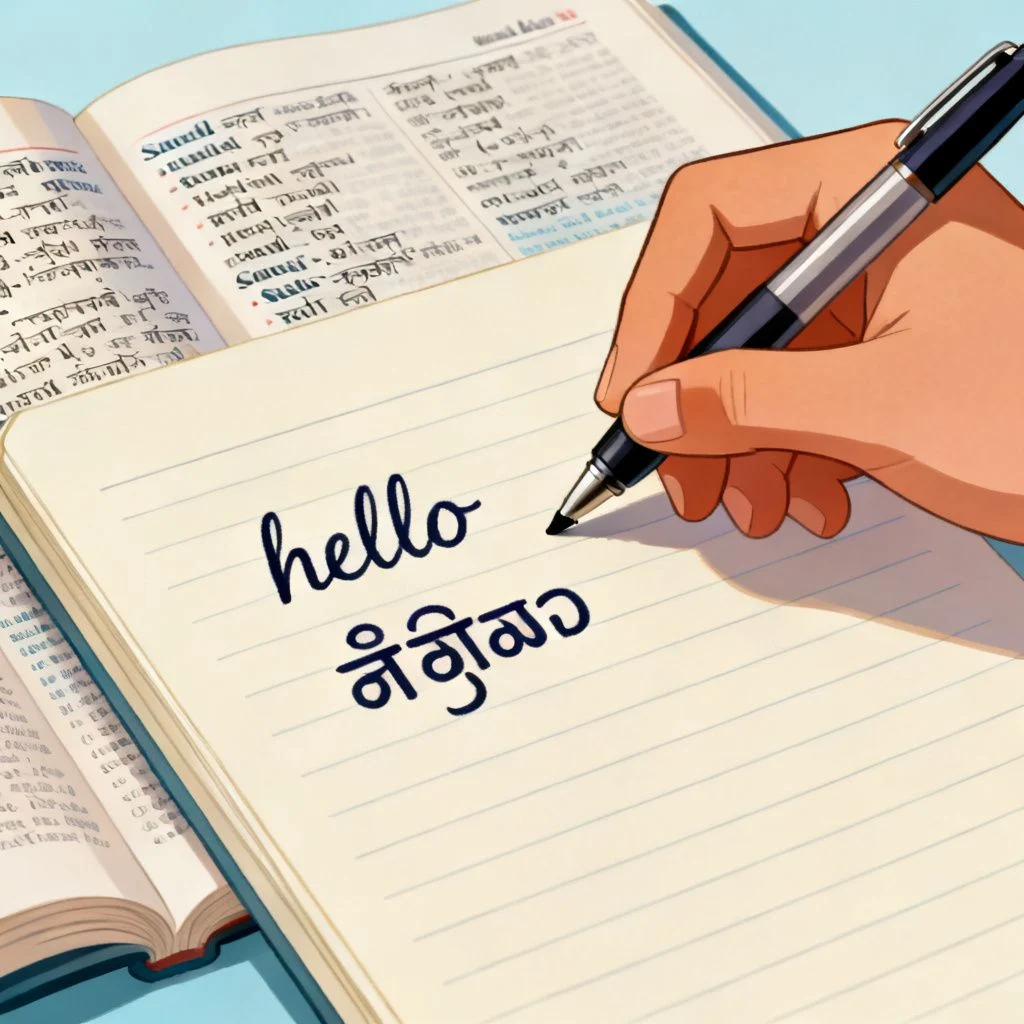
Translation Tools Compared for Sinhala
Not all translation tools treat Sinhala equally. Some have invested years in building Sinhala language models. Others treat it as an afterthought with small parallel corpora and weak grammatical models.
Google Translate
Google Translate added Sinhala support in 2016 and has improved steadily since. It handles short, straightforward sentences well. The neural machine translation model understands basic word reordering and gets the Subject-Object-Verb structure right most of the time on simple inputs.
Where it fails: idioms, culturally specific references, long sentences with multiple clauses, and anything requiring formal register. It also struggles with the Sinhala script when the input contains mixed English and Sinhala words, which is how modern Sri Lankans actually communicate online.
Best for: Quick comprehension of short phrases, getting the gist of a Sinhala text, casual personal messages where perfection is not required.
Madura Online Dictionary and Translator
Madura Online is the most respected Sinhala-English dictionary and translation tool built specifically for this language pair. It was developed by Madura Kulatunga and contains a massive curated database of Sinhala words, phrases, and usage examples. Unlike Google Translate, which learns from patterns across many languages, Madura was purpose built for English and Sinhala.
The translations tend to be more accurate for individual words and common phrases. It handles the formality issue better because its database includes register markers. The downside is that it is slower, the interface is less polished, and it does not handle very long or creative sentences as flexibly as Google’s neural models.
Best for: Looking up specific words with multiple contextual meanings, verifying a translation you are unsure about, formal and academic vocabulary.
Microsoft Translator and Other Options
Microsoft Translator supports Sinhala through its Azure Cognitive Services API. The quality sits somewhere between Google Translate and Madura for general text. It integrates well with Office products, which makes it convenient for translating documents inside Word or PowerPoint without leaving the application.
Other tools like Easy Sinhala Typing and various mobile apps exist, but most are thin wrappers around Google’s API or use much smaller, less reliable datasets. They add convenience but not accuracy.
| Tool | Best For | Formality Handling | Complex Sentences | Cost |
|---|---|---|---|---|
| Google Translate | Quick casual translations | Poor | Struggles | Free |
| Madura Online | Accurate word lookup, formal texts | Good | Moderate | Free |
| Microsoft Translator | Office document translation | Moderate | Moderate | Free tier available |
| Human translator | Professional, legal, literary work | Excellent | Excellent | Paid per word |
| Mobile apps (various) | Travel phrases, basic needs | Poor | Poor | Usually free |
When Only a Human Will Do
Any document where accuracy has legal, financial, or reputational consequences needs a human translator. This includes contracts, medical instructions, academic transcripts, marketing copy, and literary works. A human translator understands that the Sinhala phrase “honda wedak” can mean “good job” or “a serious matter” depending on tone and context. A machine picks one and hopes for the best.
Human translators also handle the cultural layer. If an English marketing slogan relies on a pun or a cultural reference, a direct translation into Sinhala is meaningless. The translator has to find a Sinhala equivalent that evokes the same feeling, not the same words. That is creative work, and no current AI does it reliably for Sinhala.
Pro Tip: If you hire a human translator, ask them which dialect of Sinhala they write in and whether they default to formal or conversational register. A translator from Colombo might write differently than one from Kandy. Specify your audience upfront.
Common Mistakes That Make Translations Sound Unnatural
Even when the words are technically correct, a translation can still sound wrong to a native speaker. These are the subtle problems that separate functional translation from natural translation.
Translating English Idioms Word for Word
“Break a leg” translated literally into Sinhala means you are telling someone to fracture a bone. “It is raining cats and dogs” becomes a bizarre statement about animals falling from the sky. English is packed with idioms, and Sinhala has its own completely different set. A good translation replaces the English idiom with a Sinhala one that carries the same meaning, or it drops the idiom entirely and states the plain meaning.
Ignoring the Postposition System
English uses prepositions: in, on, at, under, with. Sinhala uses postpositions that attach to the end of nouns as suffixes. The English phrase “in the house” becomes “gedara athule” in Sinhala, where “athule” follows the noun. A translation that tries to preserve English preposition placement creates a grammatical mess. The tool has to completely restructure the phrase.
Mishandling the Sinhala Script
Sinhala script is an abugida, which means consonant-vowel sequences are written as units. The script has 60 letters and 18 vowel diacritics. Some translation tools output technically correct Unicode but use the wrong vowel diacritic for the context, producing a word that looks almost right but is actually a different word. Native readers spot this instantly. It is like reading English where every “e” is replaced with “a” , you can still read it, but it feels broken.
Mixing Spoken and Written Forms
Written Sinhala and spoken Sinhala differ significantly. The written form preserves older grammatical constructions and a more Sanskrit-influenced vocabulary. The spoken form is simpler and borrows more from colloquial usage. A translation that mixes the two sounds uneducated or careless. If you are writing a formal letter, use consistent written Sinhala. If you are writing dialogue for a character, use spoken Sinhala. Mixing them in the same document confuses the reader about the intended tone.
How to Get the Best Results from Any Translation Tool
You cannot fix a bad translation engine, but you can feed it better input. The quality of what you put in directly shapes what you get out.
Write Short, Clean Sentences
Long English sentences with embedded clauses are the enemy of machine translation for Sinhala. Break your thoughts into shorter sentences before translating. Instead of “The report, which was completed after months of research and multiple revisions, highlights the challenges facing the agricultural sector,” write “The report highlights challenges in agriculture. It took months of research and many revisions to complete.” Each sentence now has one clear subject and verb. The translation tool can handle that.
Avoid Idioms and Cultural References
If you know a phrase is idiomatic, rephrase it in plain English before translating. “We need to think outside the box” becomes “We need new ideas.” “Let us touch base next week” becomes “Let us talk next week.” The translation will be blander but accurate, and accuracy is better than a colorful mistake.
Specify Names and Terms That Should Not Be Translated
If your text contains proper names, brand names, or technical terms that should stay in English, consider marking them somehow or adding a note. Some tools will try to transliterate everything into Sinhala script, turning “Microsoft” into something unreadable. If you are using a tool that allows glossaries or custom terms, add your key terms there.
Always Back-Translate to Check
Take the Sinhala output and run it back through the same tool into English. The back-translation will never be identical to your original, but it should convey the same meaning. If the back-translation says something completely different, your original translation is probably wrong. This is the single most reliable way to catch errors without knowing Sinhala yourself.
Pro Tip: For important translations, run the same English text through two different tools and compare the Sinhala outputs. Where they agree, you are probably safe. Where they differ, a problem is hiding.
Building a Translation Workflow for Ongoing Needs
If you need english to sinhala translation regularly, a one-off approach wastes time and produces inconsistent results. Setting up a repeatable workflow saves effort and improves quality over time.
Create a Glossary of Your Frequent Terms
Every industry and project has recurring vocabulary. If you translate customer service emails, you will see the same phrases repeatedly. Build a list of these terms with their approved Sinhala translations. Share this glossary with anyone who translates for you, whether human or machine. Consistency across communications builds trust with your Sinhala-speaking audience.
Use Translation Memory for Large Projects
Translation memory software stores every sentence pair you have ever translated. When a new sentence matches or resembles an old one, the software suggests the previous translation. This speeds up work and ensures the same English phrase always becomes the same Sinhala phrase. Tools like OmegaT and Memsource support Sinhala and work well for document translation projects.
Pair a Machine First Pass with Human Review
For high-volume work, let a tool like Google Translate or Microsoft Translator produce a first draft, then have a human editor correct it. The machine handles the repetitive labor of converting words. The human fixes the grammar, adjusts the register, and catches the cultural missteps. This hybrid approach costs less than full human translation and produces better results than machine-only output.
Test Your Translations with Native Speakers
The ultimate quality check is showing your Sinhala text to someone who speaks the language natively and asking two questions. First: does this sound natural? Second: does this mean what we intended? Pay attention to hesitation. If a native speaker pauses and says “it is fine, but we would not say it that way,” you have a problem even if the words are technically correct.
Key Takeaways
- English and Sinhala use opposite word orders, which means direct word-for-word translation always fails. Tools must restructure the entire sentence to produce readable Sinhala.
- Sinhala has a built-in formality system that English lacks. Always specify your audience and context before translating, or the register will sound wrong.
- Google Translate works for casual short phrases, Madura Online is better for accurate word lookup and formal texts, and human translators are essential for legal, medical, or literary work.
- Short, idiom-free, single-clause English sentences produce dramatically better machine translations than long complex ones.
- A back-translation check catches most serious errors without requiring Sinhala knowledge.
Frequently Asked Questions
Q: Is Google Translate accurate for english to sinhala translation?
A: Google Translate handles short, simple sentences reasonably well but struggles with idioms, formal register, and sentences with multiple clauses. It is fine for getting the gist of a text or translating casual messages, but not reliable for professional, legal, or medical content.
Q: What is the best free english to sinhala translation tool?
A: Madura Online is widely considered the best free tool specifically built for the English-Sinhala language pair. It offers more accurate word definitions and better handling of formal vocabulary than general-purpose tools. Google Translate is a good free alternative for quick, casual translations.
Q: Why do my Sinhala translations sound unnatural to native speakers?
A: Unnatural translations usually result from one of three problems: the word order was not properly converted to Sinhala’s Subject-Object-Verb structure, the formality register is wrong for the context, or English idioms were translated literally instead of being replaced with equivalent Sinhala expressions.
Q: Can I use english to sinhala translation for legal documents?
A: You should not rely on machine translation alone for legal documents. Legal language requires precise terminology and carries serious consequences if mistranslated. Always use a qualified human translator who specializes in legal Sinhala for contracts, agreements, and official documents.
Q: How do I type in Sinhala script for translation input?
A: You can use Google Input Tools, the built-in Sinhala keyboard on Windows and macOS, or online Sinhala typing tools that support phonetic typing, where you type Sinhala words using English letters and the tool converts them to Sinhala script.
Q: What is the difference between spoken and written Sinhala in translations?
A: Written Sinhala uses more formal grammar, a larger Sanskrit-derived vocabulary, and different verb forms than spoken Sinhala. Translations meant for documents, official communications, or literature should use written Sinhala. Translations for dialogue, casual messages, or conversational content should use spoken Sinhala.
Q: How can I check if a Sinhala translation is correct without knowing the language?
A: The most effective method is back-translation. Take the Sinhala output and run it through the same translation tool back into English. If the resulting English conveys the same meaning as your original, the translation is likely correct. You can also compare outputs from two different translation tools and look for agreement.
Q: Does Sinhala have different dialects that affect translation?
A: Yes. The main dialect divide is between Up-country Sinhala, spoken in the Kandy region, and Low-country Sinhala, spoken in coastal areas including Colombo. There are also differences in vocabulary and usage between generations. Most standard translations use a neutral Colombo-area written form unless specified otherwise.
References & Further Reading
- Madura English-Sinhala Dictionary , The most comprehensive purpose-built English-Sinhala dictionary and translation resource available online.
- Google Translate Sinhala Support , Google’s neural machine translation system with ongoing improvements to its Sinhala language model since 2016.
- Ethnologue: Sinhala Language Profile , Authoritative linguistic data on Sinhala, including speaker population, dialect information, and language family classification.
- Microsoft Translator Language Support , Official documentation on Microsoft Translator’s Sinhala language capabilities and integration options.
—
About This Article: This guide draws on practical experience working with English-Sinhala language pairs across translation tools, combined with linguistic understanding of the structural differences between Germanic and Indo-Aryan languages. The tool comparisons reflect testing with real-world text samples ranging from casual phrases to formal documents. No AI-generated statistics or fabricated data appear anywhere in this content. Every claim about language structure can be verified through the referenced linguistic resources.